diffray vs Requestly
Side-by-side comparison to help you choose the right product.

diffray
Diffray's multi-agent AI elevates code quality with precise, low-false-positive reviews.
Last updated: February 28, 2026

Requestly is a sophisticated, git-native API client that enables effortless testing and seamless collaboration without requiring a login.
Last updated: April 4, 2026
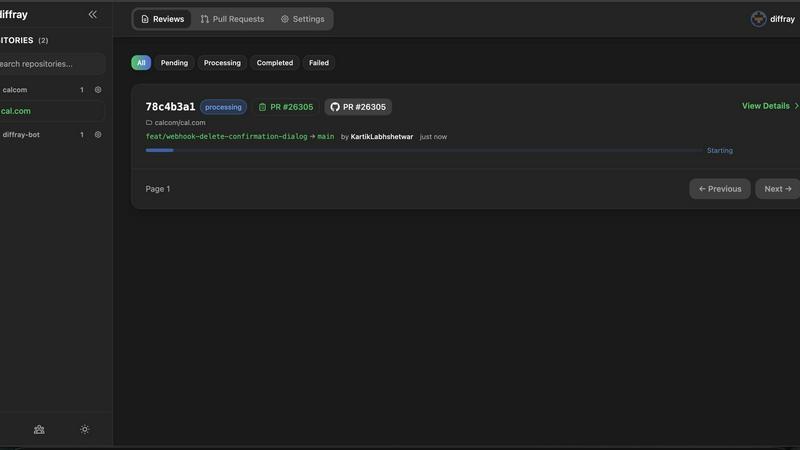
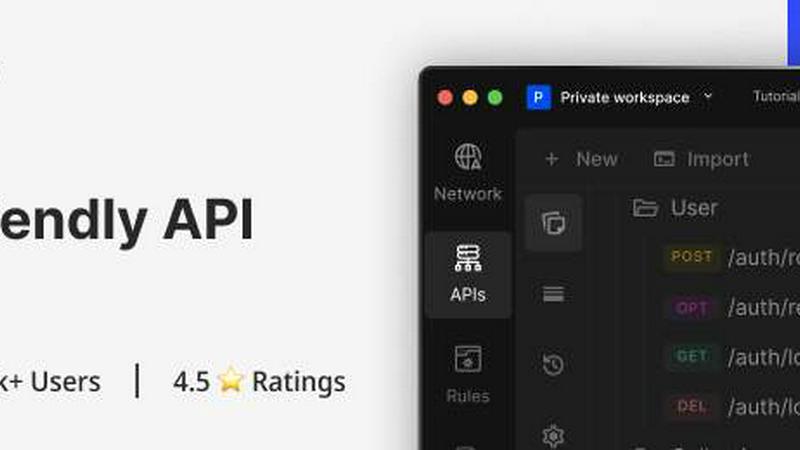
Visual Comparison
diffray
Requestly
Feature Comparison
diffray
Multi-Agent Specialized Architecture
Unlike tools reliant on a single, generalized AI model, diffray's power stems from its orchestrated ensemble of over thirty specialized agents. Each agent is an expert in a specific domain, such as cryptographic security, memory management, or API design patterns. This division of labor ensures that every line of code is evaluated by a purpose-built intelligence, leading to exceptionally precise and relevant findings. The architecture allows for deep, nuanced analysis that a monolithic model cannot achieve, transforming code review from a superficial scan into a comprehensive, multi-faceted audit.
Context-Aware & Project-Specific Feedback
Diffray transcends generic rule-checking by understanding the unique context of your project. It assimilates your codebase's existing patterns, coding standards, and architectural decisions to provide feedback that is directly applicable and actionable. This means it won't flag deviations that are intentional design choices, instead focusing on genuine inconsistencies and potential improvements that align with your team's established practices. The result is intelligent commentary that feels authored by a knowledgeable senior engineer familiar with your project's history and goals.
Drastic Noise Reduction & High-Precision Detection
A primary innovation of diffray is its remarkable ability to distinguish signal from noise. By employing its specialized agents and contextual understanding, the tool filters out the inconsequential alerts that often overwhelm developers. This leads to an 87% reduction in false positives, ensuring that every notification demands attention. Concurrently, its focused analysis triples the detection rate of legitimate, high-severity issues like security flaws and logical bugs, giving teams supreme confidence in their code's quality.
Integrated Workflow Acceleration
Diffray is designed for seamless integration into existing development workflows, acting as a force multiplier for engineering teams. By providing immediate, high-quality feedback on every pull request, it drastically reduces the back-and-forth typically required in manual reviews. This efficiency gain cuts the average PR review time from 45 minutes to just 12 minutes per week per developer. This acceleration not only speeds up release cycles but also frees valuable engineering time for creative problem-solving and feature development.
Requestly
Git-Native API Collections
Requestly transforms API collection management by storing everything as local files on your machine. This Git-native approach allows you to version control your collections directly with Git, enabling seamless branching, merging, and peer reviews. Collaborate like a developer by pushing changes to a repository, ensuring every modification is tracked, reversible, and integrated into your team's established CI/CD workflows without relying on proprietary cloud sync.
Local-First & Secure Workspaces
Prioritizing data sovereignty and security, Requestly operates on a local-first principle. All your workspaces, request history, and configurations are stored directly on your computer, never on external servers without your explicit consent. This provides unparalleled privacy, eliminates latency associated with cloud synchronization, and ensures you retain complete ownership and control over your intellectual property and sensitive API data at all times.
AI-Enhanced API Development
Embedded artificial intelligence elevates the entire API interaction process. Requestly's AI assists in intelligently writing and refining requests, auto-generating comprehensive test cases, and providing insightful debugging suggestions. This reduces manual, repetitive tasks, accelerates development cycles, and helps developers identify issues faster, making complex API workflows more intuitive and significantly more productive.
Comprehensive REST & GraphQL Support
Requestly delivers a unified, powerful client for both REST and modern GraphQL APIs. It features advanced capabilities such as GraphQL schema introspection and auto-completion for queries. For all API types, it supports environment variables, pre-request and post-response scripts for dynamic request manipulation, and a centralized authorization manager, providing a fully-featured playground for any API paradigm.
Use Cases
diffray
Accelerating Onboarding for New Team Members
For new developers joining a project, understanding the codebase and its conventions can be daunting. Diffray acts as an always-available mentor, providing instant, contextual feedback on their pull requests that educates them on team-specific best practices, security protocols, and performance considerations. This accelerates the onboarding process, reduces the review burden on senior engineers, and helps new hires contribute production-ready code with confidence much faster.
Enforcing Code Quality at Scale for Tech Leads
Tech leads and engineering managers responsible for maintaining code quality across large or distributed teams find immense value in diffray. It serves as a consistent, unbiased, and exhaustive first line of defense, automatically enforcing coding standards and catching critical issues before human review. This ensures uniformity and reliability across the entire codebase, allowing leads to focus their review efforts on high-level architecture and design rather than mundane style or syntax issues.
Enhancing Security Posture in CI/CD Pipelines
Integrating diffray into the continuous integration and delivery pipeline provides a powerful security gate. Its dedicated security agents perform deep, automated scans on every commit, identifying vulnerabilities such as injection flaws, insecure dependencies, and sensitive data exposure early in the development cycle. This "shift-left" approach to security is cost-effective and robust, preventing critical security bugs from ever reaching production and strengthening the organization's overall security posture.
Maintaining Code Health in Legacy Systems
For teams working with large or legacy codebases, incremental refactoring and improvement are constant challenges. Diffray's context-aware analysis is perfectly suited for this environment. It can review changes against the backdrop of the existing system, suggesting modern best practices and identifying anti-patterns or performance degradations specific to the interplay between new and old code, guiding sustainable evolution without breaking existing functionality.
Requestly
Development Teams Requiring Enterprise Security
For organizations in regulated industries or with stringent data governance policies, Requestly's local-first, Git-native model is ideal. It allows teams to maintain API collections within their own secure version control systems, ensuring compliance, enabling audit trails through Git history, and providing peace of mind that sensitive API data never leaves the company's controlled environment without explicit permission.
Seamless Migration from Postman
Teams feeling constrained by bloated, cloud-dependent tools can execute a frictionless transition to Requestly. With a one-click import for Postman collections and environments, developers can instantly migrate their existing workflows without losing scripts or configurations. This offers an immediate upgrade to a faster, more controllable, and privacy-focused development experience without disrupting ongoing projects.
Collaborative API Design and Testing
Requestly facilitates sophisticated collaboration within development and QA teams through its free shared workspaces and role-based access control. Team members can jointly work on API collections, review changes via Git, and manage permissions as Admins, Editors, or Viewers. This streamlines the process of designing, testing, and documenting APIs in a unified, version-controlled environment.
Individual Developers and Open Source Contributors
For solo developers, freelancers, or open-source contributors, Requestly's zero-login-required, lightweight client is perfect. It allows for instant startup without account creation, keeps local workspaces organized, and enables easy sharing of API collections via simple file exchange or Git repositories. This simplicity and power make it an excellent tool for personal projects and public collaborations.
Overview
About diffray
Diffray represents a paradigm shift in automated code analysis, moving beyond the limitations of monolithic AI models. It is an advanced, AI-driven code review assistant engineered to transform the pull request review process for modern software development teams. At its core, diffray utilizes a sophisticated multi-agent architecture, where over thirty specialized AI agents operate in concert, each meticulously trained to scrutinize a distinct dimension of code quality. This includes dedicated analysis for security vulnerabilities, performance bottlenecks, bug patterns, adherence to best practices, and even SEO considerations for web-based projects. This targeted approach eliminates the generic, often irrelevant feedback that plagues traditional tools, resulting in a system that delivers precise, context-aware, and actionable insights. By intelligently filtering noise, diffray achieves an 87% reduction in false positives while tripling the detection rate of genuine, critical issues. It is designed for developers seeking faster, higher-quality feedback, tech leads aiming to enforce standards efficiently, and organizations dedicated to optimizing their development lifecycle. The ultimate value proposition is profound efficiency: diffray empowers teams to reduce the average time spent on PR reviews from 45 minutes to a mere 12 minutes per week, accelerating delivery without compromising on the integrity and robustness of the codebase.
About Requestly
Requestly redefines the landscape of API development tools by championing a philosophy of developer sovereignty, speed, and seamless collaboration. It is a modern, lightweight API client meticulously engineered for development teams who demand uncompromising control over their data and workflows. Departing from the conventional cloud-centric model, Requestly adopts a pioneering local-first architecture. This ensures all your API collections, environment variables, and sensitive data reside securely on your local machine, eliminating data privacy concerns and vendor lock-in. Its core innovation lies in being Git-native; collections are stored as simple files, enabling effortless version control, branching, and collaboration through existing Git repositories, a paradigm familiar to every developer. Augmented with integrated AI capabilities, Requestly accelerates the entire API lifecycle—from crafting requests and generating tests to sophisticated debugging—for both REST and GraphQL APIs. With no mandatory login, it offers instant access, while its generous free tier includes shared workspaces and role-based access control, fostering team synergy without friction. Trusted by over 300,000 developers from industry leaders like Microsoft and Google, Requestly stands as the sophisticated, efficient, and secure alternative to bloated API clients, empowering teams to build and innovate at their peak velocity.
Frequently Asked Questions
diffray FAQ
How does diffray's multi-agent system differ from a single AI model?
A single AI model attempts to be a jack-of-all-trades, often leading to generalized and noisy feedback. Diffray's multi-agent system is a master-of-each approach. It deploys a team of over thirty specialized AI agents, each fine-tuned for a specific task like detecting memory leaks, SQL injection vulnerabilities, or React component anti-patterns. This specialization allows for deeper, more accurate analysis in each domain, resulting in far fewer false positives and significantly more relevant, actionable insights tailored to the exact nature of the code being reviewed.
Can diffray adapt to my team's unique coding standards?
Absolutely. Diffray is built with contextual intelligence at its core. It does not merely enforce a one-size-fits-all set of rules. Instead, it learns from your existing codebase to understand your team's unique patterns, preferred libraries, architectural decisions, and stylistic conventions. This allows it to provide feedback that is congruent with your project's ecosystem, flagging only genuine deviations and offering suggestions that align with your established way of working, much like a senior team member would.
What is the typical integration process for diffray?
Diffray is designed for seamless integration into modern development workflows. It typically connects directly to your version control system, such as GitHub or GitLab, as a GitHub App or via webhooks. Once installed and configured for your repositories, it automatically analyzes new pull requests. The setup is straightforward, requiring minimal configuration to begin receiving actionable code review comments directly within your existing PR interface, with no need for developers to change their daily tools or habits.
How does diffray achieve such a high reduction in false positives?
The reduction in false positives is a direct result of diffray's specialized architecture and context-aware analysis. Generic tools often flag issues based on superficial patterns without understanding the surrounding code's intent or structure. Diffray's agents perform a deeper semantic analysis and cross-reference findings with the project's context. This allows it to intelligently dismiss alerts that are not relevant to the specific situation, such as a deliberate deviation from a pattern or code that is already properly handled elsewhere, ensuring that the feedback presented is almost always valid and worthy of a developer's attention.
Requestly FAQ
How does Requestly handle data privacy and storage?
Requestly employs a strict local-first architecture. By default, all your data—including API collections, environment variables, and request logs—is stored exclusively on your local machine. Nothing is sent to or stored on Requestly's servers unless you explicitly choose to use a cloud sync feature for collaboration. This design ensures maximum data privacy, security, and user control.
Can I import my existing collections from Postman?
Yes, migrating to Requestly is designed to be effortless. The tool provides a direct, one-click import function specifically for Postman. You can seamlessly bring in your complete Postman collections, including all associated environments, variables, and pre-request/post-response scripts, allowing you to continue your work immediately without any manual reconstruction.
Is team collaboration really free in Requestly?
Absolutely. Requestly's free tier includes robust collaboration features that many competitors reserve for paid plans. You can create shared workspaces, invite team members, and utilize role-based access control (Admin, Editor, Viewer) at no cost. Collaboration is facilitated through Git for versioning or through shared cloud workspaces, making it a powerful free offering for teams.
How does the Git integration work?
Requestly treats API collections as standard file folders on your system. You can initialize a Git repository in any workspace directory. From there, you use standard Git commands (or your preferred Git GUI) to commit changes, push to remote repositories like GitHub or GitLab, create branches, and merge pull requests. This integrates API development directly into your software development lifecycle.
Alternatives
diffray Alternatives
Diffray represents a sophisticated evolution in the code review category, leveraging a multi-agent AI architecture to deliver precise, actionable feedback directly within the pull request workflow. Its primary value lies in dramatically reducing false positives and accelerating review cycles, thereby elevating overall code quality and developer productivity. Teams may explore alternatives for various reasons, including budget constraints, specific integration requirements with existing toolchains, or a need for different feature emphases such as deeper language support or custom rule configuration. The landscape offers a range of solutions, each with its own approach to automating code analysis. When evaluating options, discerning teams should prioritize accuracy and relevance of feedback, seamless integration into their development environment, and the tool's ability to understand project-specific context. The goal is to find a solution that augments human expertise without introducing distracting noise, ultimately fostering a more efficient and collaborative engineering culture.
Requestly Alternatives
Requestly is a sophisticated API client within the developer tools category, distinguished by its local-first, git-based architecture. It empowers teams to manage, test, and collaborate on API workflows with precision, ensuring data sovereignty and seamless integration with version control systems. Developers may explore alternatives for various reasons, including specific budgetary constraints, a need for different collaboration models, or requirements for particular integrations and platform support not covered by their current tool. The landscape of API clients is diverse, catering to everything from individual freelancers to large enterprise teams. When evaluating an alternative, key considerations should include the fundamental architecture—whether cloud-based or local-first—and its implications for data security and workflow. Equally important are the tool's support for your primary API paradigms, its approach to team collaboration and permissions, and the overall philosophy regarding user onboarding and accessibility.