
conceptviz vs Image3D AI
Side-by-side comparison to help you choose the right product.

conceptviz
ConceptViz transforms intricate scientific concepts into precise, classroom-ready diagrams for educators and.
Last updated: March 1, 2026

Image3D AI
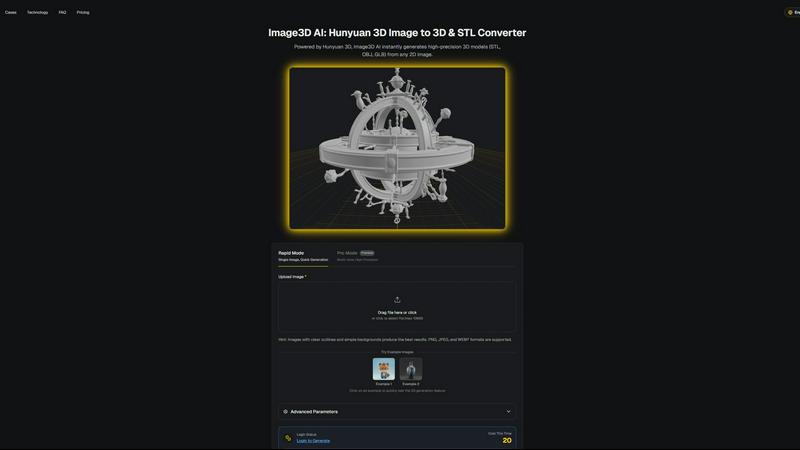
Image3D AI instantly transforms any 2D image into a high-precision 3D model for printing and digital creation.
Last updated: March 1, 2026
Visual Comparison
conceptviz
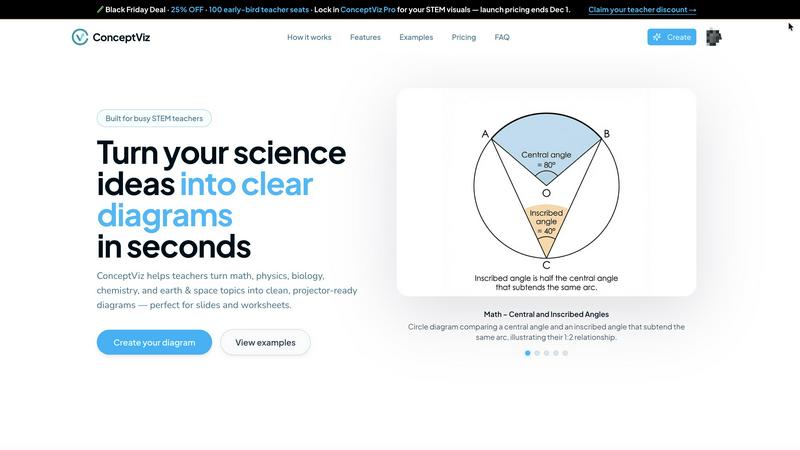
Image3D AI
Feature Comparison
conceptviz
Intelligent Plain-English Interpretation
At the heart of ConceptViz is a powerful AI engine designed to understand nuanced scientific descriptions. Users are not required to learn a specialized syntax or coding language; they can describe the desired diagram as they would to a colleague. For instance, inputting "convex lens ray diagram with object between F and 2F" or "labeled plant cell cross-section for 8th grade" yields an accurate, context-aware visual. This natural interface dramatically lowers the barrier to entry, allowing subject matter experts to focus on their content rather than the mechanics of diagram creation.
Classroom-Ready Visual Design
Every diagram generated is pre-optimized for real-world educational use. ConceptViz applies a set of stringent design principles to ensure maximum clarity and impact. This includes the use of thick, easily distinguishable lines, high-contrast color palettes, and minimalistic backgrounds to reduce visual noise. Text labels are strategically placed for readability, even from the back of a lecture hall. The platform intelligently tailors the visual complexity and terminology to the selected grade level, ensuring appropriateness for the intended audience.
Subject-Specific & Grade-Band Presets
To accelerate the creation process, ConceptViz offers a curated library of presets spanning core STEM disciplines—Physics, Biology, Chemistry, Earth & Space, and Mathematics. These presets are further refined according to standard educational grade bands (elementary, middle, high school, and university-level). This structured approach ensures that the generated visuals align with curricular standards and typical learning progressions, providing a reliable foundation that users can then customize with their specific descriptive prompt.
Seamless Integration into Workflows
Understanding the practical constraints of educators and researchers, ConceptViz is built for effortless integration. Diagrams are generated in a widescreen aspect ratio ideal for modern presentation software like PowerPoint and Google Slides. They are exported as high-resolution PNG files with clean, white backgrounds that are perfectly suited for both digital displays and printed handouts. This allows users to generate, download, and insert a professional diagram into their lesson or paper in a matter of seconds, reclaiming valuable preparation time.
Image3D AI
Hunyuan 3D-Powered Engine
At the heart of Image3D AI lies the formidable Hunyuan 3D engine from Tencent, a cutting-edge AI technology that provides the computational intelligence for rapid and high-precision 3D reconstruction. This advanced engine analyzes the geometry, depth, and material properties within a 2D image to infer and construct a fully-realized three-dimensional model, ensuring professional-grade results that balance intricate detail with computational efficiency.
Dual Generation Modes
The platform offers two distinct operational modes tailored for different needs and input types. Rapid Mode is designed for speed and convenience, generating a 3D model from a single uploaded image in approximately 60 seconds. For superior accuracy and detail, Pro Mode utilizes multi-view images, allowing the AI to perform a physically accurate reconstruction from multiple angles, yielding a higher-fidelity asset ideal for professional applications.
Multi-Format Export Flexibility
Understanding the diverse needs of modern creative pipelines, Image3D AI provides exports in all standard 3D file formats. Users can download their creations as STL files for 3D printing, OBJ files for traditional 3D editing software, or GLB files—the modern standard for web, AR, and real-time applications that packages model, textures, and materials into a single, efficient file.
Advanced Parameter Controls
Beyond automated generation, the tool offers users a degree of creative control through advanced parameters. These settings allow for the fine-tuning of the generation process, enabling adjustments to suit specific downstream needs, such as optimizing mesh density for 3D printing or simplifying geometry for game engine performance, ensuring the output is perfectly tailored to its intended use.
Use Cases
conceptviz
Enhancing K-12 STEM Lesson Preparation
Teachers can rapidly generate custom, grade-appropriate diagrams to illustrate daily lesson concepts. Instead of scouring the internet for a subpar image of a food web or a lever system, an educator can describe exactly what they need. This ensures the visual aligns perfectly with their teaching narrative and vocabulary, creating a more cohesive and engaging learning experience for students across elementary, middle, and high school science and math classrooms.
Creating Illustrations for Academic Research Papers
Researchers and graduate students can utilize ConceptViz to produce precise, publication-ready figures for journals, theses, and dissertations. The platform can visualize complex experimental setups, theoretical models, data schematics, and process flows based on a detailed textual description. This empowers academics to communicate their findings with professional-grade visuals without requiring expertise in graphic design software, accelerating the path from research to publication.
Developing Customized Educational Worksheets & Assessments
Educators and curriculum developers can create unique, copyright-free diagrams for worksheets, quizzes, exams, and textbook supplements. By generating original visuals tailored to specific questions or problems, they eliminate concerns about image licensing and ensure that assessment materials are perfectly aligned with the taught material. This is invaluable for creating differentiated instruction materials or building a proprietary library of educational resources.
Supporting Student Projects and Study Aids
Students at all levels can use ConceptViz to create clear diagrams for their own study notes, project presentations, and science fair displays. By actively describing a concept to generate a visual, they engage in a powerful form of retrieval practice and self-explanation. This process deepens understanding and allows them to produce professional-looking visuals that enhance the quality and credibility of their academic work.
Image3D AI
3D Printing & Prototyping
Enthusiasts and professionals can instantly convert product photos, sketches, or concept art into ready-to-print STL files. This streamlines the prototyping process, allowing for rapid iteration and physical realization of ideas without the need for complex manual CAD modeling, making custom fabrication more accessible than ever before.
Game Development & Real-Time Assets
Game developers and digital artists can rapidly generate game-ready 3D models from character concept art, prop sketches, or reference images. With support for PBR materials and export formats compatible with engines like Unity and Unreal Engine, it accelerates asset creation pipelines, turning visual concepts into in-game objects with remarkable speed.
E-Commerce & AR Visualization
Online retailers can transform flat product catalog images into interactive 3D models and AR-ready assets. This enhances customer engagement by allowing interactive product previews from every angle, providing a superior shopping experience that can reduce returns and increase conversion rates through better visual communication.
Architectural Visualization & Design
Architects and interior designers can quickly generate basic 3D forms from sketches, floor plans, or inspiration images. This facilitates early-stage conceptualization and client presentations, saving valuable time that would otherwise be spent on manual base modeling from scratch.
Overview
About conceptviz
ConceptViz represents a paradigm shift in the creation of scientific and educational visuals. It is an advanced, AI-powered platform meticulously engineered to transmute abstract theories and complex data into pristine, publication-quality diagrams. Designed for the exacting standards of STEM communication, it serves as an indispensable intellectual partner for educators, researchers, and students alike. The platform's core genius lies in its sophisticated interpretation of natural language; users simply articulate a concept in plain English, and ConceptViz instantly generates a corresponding, high-fidelity visual that is both academically rigorous and pedagogically optimized. This process elegantly bypasses the traditional barriers of manual illustration skill or the frustrating compromise of unsuitable stock imagery. Every diagram is crafted with an unwavering focus on didactic clarity: labels are legible, contrasts are high, and layouts are intelligently structured to remain effective whether displayed on a classroom projector, embedded in a digital publication, or printed on a worksheet. From foundational K-12 concepts to intricate graduate-level research figures, ConceptViz is more than a tool—it is a dedicated ally in the noble pursuit of elegant, effective, and unambiguous science communication.
About Image3D AI
Image3D AI represents the pinnacle of accessible three-dimensional creation, elegantly dissolving the formidable barriers traditionally associated with professional 3D modeling. This sophisticated platform harnesses the formidable computational prowess of Tencent's Hunyuan 3D engine to perform a remarkable alchemy: transforming ordinary two-dimensional images into intricate, production-ready 3D assets within mere seconds. It addresses a profound and time-intensive challenge, democratizing high-fidelity 3D generation for a vast spectrum of creators, from novices to seasoned professionals. The core value proposition is an unprecedented acceleration and simplification of creative workflows. By simply uploading a single photograph or a curated series of multi-view images, users can instantly unlock detailed three-dimensional models, complete with realistic textures and materials, ready for immediate application. This tool is meticulously engineered for a diverse audience, including 3D printing enthusiasts requiring watertight, print-ready STL files, game developers in need of rapid asset generation, digital artists expanding their visual vocabulary, and e-commerce professionals seeking interactive product showcases. Image3D AI stands not merely as a tool, but as a gateway to a new frontier of digital expression, where imagination is the sole prerequisite.
Frequently Asked Questions
conceptviz FAQ
What subjects and educational levels does ConceptViz support?
ConceptViz is specifically engineered for STEM (Science, Technology, Engineering, and Mathematics) disciplines. It offers dedicated presets and optimized AI models for core subjects including Physics, Biology, Chemistry, Earth & Space Science, and Mathematics. The platform is designed to scale across educational tiers, from elementary school introductions to advanced university-level and research concepts, with adjustable complexity based on the selected grade band.
Do I need any design or technical skills to use ConceptViz?
Absolutely not. ConceptViz is built to be accessible to anyone with domain knowledge in their subject area. The primary interface is a simple text box where you describe your desired diagram in plain English. No drawing skill, graphic design experience, or knowledge of coding is required. The platform's intelligence handles the translation from your description to a polished visual.
What file formats are available for download, and how can I use the diagrams?
Diagrams are generated and provided as high-resolution PNG files. This universal format ensures compatibility with all major software. You can directly insert the downloaded images into presentation tools like Microsoft PowerPoint, Google Slides, Keynote, or into document editors like Word and Google Docs. The clean backgrounds and widescreen format make them ideal for slideshows, while the high resolution ensures they remain crisp when printed on worksheets or posters.
Is there a limit to how many diagrams I can create?
Based on the provided context, ConceptViz offers a free tier that allows users to generate diagrams without a credit card, which includes 4K Ultra HD quality. For specific limits on the number of generations per month or access to advanced features, users would typically refer to the detailed pricing plans on the ConceptViz website. The lifetime deal mentioned suggests an alternative to subscription models for extended, unlimited use.
Image3D AI FAQ
What image types work best for 3D conversion?
For optimal results, use high-contrast source images with clear, well-defined outlines and simple, uncluttered backgrounds. Avoid blurry, poorly lit, or occluded subjects. For technical workflows like 3D printing, images with strong, clean silhouettes yield the best geometry for conversion into a printable STL file.
What is the difference between Rapid Mode and Pro Mode?
Rapid Mode is designed for speed, generating a model from a single image in about a minute—ideal for logos or sketches. Pro Mode requires multiple images of a subject from different angles (multi-view) to perform a more accurate, high-precision 3D reconstruction, which is recommended for capturing real-world objects with complex geometry.
Which file format should I download for my project?
The choice depends on your intended use. Select .STL for 3D printing, as it is the industry standard for slicer software. The .OBJ format is excellent for further editing in traditional 3D modeling applications. For web, AR, or real-time applications, the .GLB format is the modern, efficient choice as it contains the model, textures, and materials in one file.
Is technical 3D modeling knowledge required to use Image3D AI?
No specialized 3D skills are required. The platform is designed to be intuitive and accessible. The core process involves simply uploading an image and initiating the AI-powered conversion. Guidance is provided on image selection and mode choice to help users achieve the best possible results effortlessly.
Alternatives
conceptviz Alternatives
ConceptViz occupies a distinguished space within the AI-powered content creation and data visualization landscape. It is a specialized platform engineered to translate complex scientific and mathematical ideas into precise, classroom-ready diagrams, serving as an essential tool for STEM educators and researchers. Its core value lies in transforming abstract theory into tangible, elegant visuals that enhance understanding and communication. Users may explore alternatives for various reasons, including budgetary considerations, the need for different feature sets beyond academic diagramming, or compatibility with specific operating systems or existing workflows. Some may seek tools with broader creative applications or different subscription models that better align with their institutional or personal usage patterns. When evaluating alternatives, it is crucial to consider the specific use case. Key factors include the tool's ability to handle technical and scientific subject matter with accuracy, the quality and clarity of its output for educational settings, and the efficiency of its user interface. The ideal solution should not only generate visuals but do so with an understanding of pedagogical intent and the practical demands of both digital and print mediums.
Image3D AI Alternatives
Image3D AI stands at the forefront of AI-powered 3D generation, a sophisticated tool that elegantly transforms two-dimensional images into detailed, textured 3D models. It belongs to the innovative category of design tools that are redefining accessibility in digital creation, making professional-grade asset generation available to a broader audience. Users may explore alternatives for various reasons, including specific budgetary considerations, the need for different feature sets such as animation capabilities or specialized export formats, or compatibility with particular operating systems and creative ecosystems. The landscape of 3D generation tools is diverse, catering to nuanced technical requirements and project scopes. When evaluating other solutions, discerning creators should consider the fidelity and print-readiness of the output geometry, the intelligence behind automated texture and material generation, and the flexibility of export options to ensure seamless integration into their existing workflow. The core objective remains finding a platform that balances raw computational power with an intuitive user experience.