diffray vs Skene
Side-by-side comparison to help you choose the right product.

diffray
Diffray's multi-agent AI elevates code quality with precise, low-false-positive reviews.
Last updated: February 28, 2026

Skene empowers you to harness your codebase as a prompt-driven growth engine you fully control and own.
Last updated: February 28, 2026
Visual Comparison
diffray
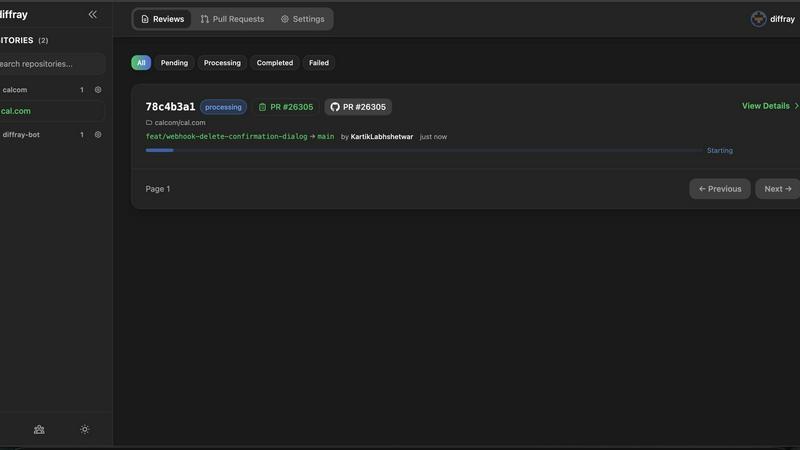
Skene
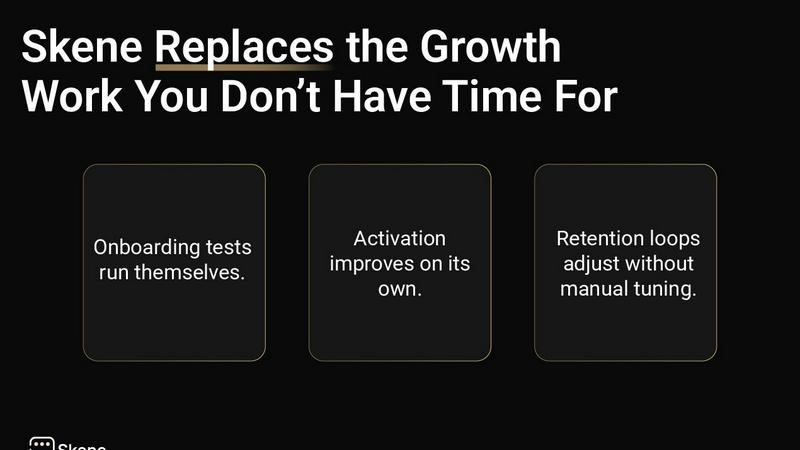
Feature Comparison
diffray
Multi-Agent Specialized Architecture
Unlike tools reliant on a single, generalized AI model, diffray's power stems from its orchestrated ensemble of over thirty specialized agents. Each agent is an expert in a specific domain, such as cryptographic security, memory management, or API design patterns. This division of labor ensures that every line of code is evaluated by a purpose-built intelligence, leading to exceptionally precise and relevant findings. The architecture allows for deep, nuanced analysis that a monolithic model cannot achieve, transforming code review from a superficial scan into a comprehensive, multi-faceted audit.
Context-Aware & Project-Specific Feedback
Diffray transcends generic rule-checking by understanding the unique context of your project. It assimilates your codebase's existing patterns, coding standards, and architectural decisions to provide feedback that is directly applicable and actionable. This means it won't flag deviations that are intentional design choices, instead focusing on genuine inconsistencies and potential improvements that align with your team's established practices. The result is intelligent commentary that feels authored by a knowledgeable senior engineer familiar with your project's history and goals.
Drastic Noise Reduction & High-Precision Detection
A primary innovation of diffray is its remarkable ability to distinguish signal from noise. By employing its specialized agents and contextual understanding, the tool filters out the inconsequential alerts that often overwhelm developers. This leads to an 87% reduction in false positives, ensuring that every notification demands attention. Concurrently, its focused analysis triples the detection rate of legitimate, high-severity issues like security flaws and logical bugs, giving teams supreme confidence in their code's quality.
Integrated Workflow Acceleration
Diffray is designed for seamless integration into existing development workflows, acting as a force multiplier for engineering teams. By providing immediate, high-quality feedback on every pull request, it drastically reduces the back-and-forth typically required in manual reviews. This efficiency gain cuts the average PR review time from 45 minutes to just 12 minutes per week per developer. This acceleration not only speeds up release cycles but also frees valuable engineering time for creative problem-solving and feature development.
Skene
Intelligent Codebase Analysis
Skene's core functionality lies in its ability to analyze the underlying codebase directly. This feature identifies user flows, friction points, and potential activation opportunities, enabling developers to make informed decisions for optimizing the user journey.
Automated Growth Iteration
Gone are the days of manual A/B testing and tedious dashboard monitoring. Skene autonomously generates, tests, and deploys optimized versions of essential user journeys, including onboarding and retention, ensuring continuous improvement with every user interaction.
Seamless Integration with Development Environments
Skene integrates directly into popular development environments, turning the IDE into a command center for automated product expansion. This seamless integration ensures that growth logic operates in harmony with existing code, enhancing both performance and user experience.
Real-Time Analytics Dashboard
The platform provides an insightful analytics dashboard that tracks real-time user progress, completion rates, and engagement metrics. This feature allows developers to identify bottlenecks, measure the impact of improvements, and continually optimize onboarding flows based on data-driven insights.
Use Cases
diffray
Accelerating Onboarding for New Team Members
For new developers joining a project, understanding the codebase and its conventions can be daunting. Diffray acts as an always-available mentor, providing instant, contextual feedback on their pull requests that educates them on team-specific best practices, security protocols, and performance considerations. This accelerates the onboarding process, reduces the review burden on senior engineers, and helps new hires contribute production-ready code with confidence much faster.
Enforcing Code Quality at Scale for Tech Leads
Tech leads and engineering managers responsible for maintaining code quality across large or distributed teams find immense value in diffray. It serves as a consistent, unbiased, and exhaustive first line of defense, automatically enforcing coding standards and catching critical issues before human review. This ensures uniformity and reliability across the entire codebase, allowing leads to focus their review efforts on high-level architecture and design rather than mundane style or syntax issues.
Enhancing Security Posture in CI/CD Pipelines
Integrating diffray into the continuous integration and delivery pipeline provides a powerful security gate. Its dedicated security agents perform deep, automated scans on every commit, identifying vulnerabilities such as injection flaws, insecure dependencies, and sensitive data exposure early in the development cycle. This "shift-left" approach to security is cost-effective and robust, preventing critical security bugs from ever reaching production and strengthening the organization's overall security posture.
Maintaining Code Health in Legacy Systems
For teams working with large or legacy codebases, incremental refactoring and improvement are constant challenges. Diffray's context-aware analysis is perfectly suited for this environment. It can review changes against the backdrop of the existing system, suggesting modern best practices and identifying anti-patterns or performance degradations specific to the interplay between new and old code, guiding sustainable evolution without breaking existing functionality.
Skene
Streamlining Onboarding Processes
Skene is particularly effective in refining onboarding processes by automating the creation of tailored user journeys. This ensures that new users can easily navigate the product, thereby enhancing activation rates and reducing churn.
Enhancing Feature Adoption
By analyzing user behavior and identifying friction points, Skene enables companies to develop targeted strategies for feature adoption. This leads to improved user engagement and ensures that users derive maximum value from the product.
Automating Customer Success Initiatives
Skene supports customer success teams by automating lifecycle management and engagement strategies. This feature helps retain users by proactively addressing their needs and guiding them through the product's capabilities.
Driving Continuous Improvement
With its self-learning capabilities, Skene fosters a culture of continuous improvement within organizations. As it learns from user interactions, the platform autonomously implements updates and enhancements, ensuring that the product evolves in tandem with user expectations.
Overview
About diffray
Diffray represents a paradigm shift in automated code analysis, moving beyond the limitations of monolithic AI models. It is an advanced, AI-driven code review assistant engineered to transform the pull request review process for modern software development teams. At its core, diffray utilizes a sophisticated multi-agent architecture, where over thirty specialized AI agents operate in concert, each meticulously trained to scrutinize a distinct dimension of code quality. This includes dedicated analysis for security vulnerabilities, performance bottlenecks, bug patterns, adherence to best practices, and even SEO considerations for web-based projects. This targeted approach eliminates the generic, often irrelevant feedback that plagues traditional tools, resulting in a system that delivers precise, context-aware, and actionable insights. By intelligently filtering noise, diffray achieves an 87% reduction in false positives while tripling the detection rate of genuine, critical issues. It is designed for developers seeking faster, higher-quality feedback, tech leads aiming to enforce standards efficiently, and organizations dedicated to optimizing their development lifecycle. The ultimate value proposition is profound efficiency: diffray empowers teams to reduce the average time spent on PR reviews from 45 minutes to a mere 12 minutes per week, accelerating delivery without compromising on the integrity and robustness of the codebase.
About Skene
Skene represents a transformative leap in the realm of product-led growth (PLG) infrastructure, seamlessly integrating advanced automation with developer-centric design. It is a fully automated PLG iteration platform that caters not only to indie creators and early-stage startups but also to established PLG enterprises. By rethinking growth as a code-centric endeavor, Skene empowers developers to harness the power of their own codebase for sustained product expansion. The platform directly analyzes user flows within the code, identifies friction points, and uncovers activation opportunities, all while autonomously creating, testing, and deploying optimized versions of critical user journeys such as onboarding and retention. This innovative approach eliminates the need for cumbersome manual A/B testing and constant monitoring, transforming the developer's IDE into a strategic command center. With Skene, growth becomes a self-learning system that evolves with user interactions, ensuring that every line of code contributes to a more engaging and effective user experience.
Frequently Asked Questions
diffray FAQ
How does diffray's multi-agent system differ from a single AI model?
A single AI model attempts to be a jack-of-all-trades, often leading to generalized and noisy feedback. Diffray's multi-agent system is a master-of-each approach. It deploys a team of over thirty specialized AI agents, each fine-tuned for a specific task like detecting memory leaks, SQL injection vulnerabilities, or React component anti-patterns. This specialization allows for deeper, more accurate analysis in each domain, resulting in far fewer false positives and significantly more relevant, actionable insights tailored to the exact nature of the code being reviewed.
Can diffray adapt to my team's unique coding standards?
Absolutely. Diffray is built with contextual intelligence at its core. It does not merely enforce a one-size-fits-all set of rules. Instead, it learns from your existing codebase to understand your team's unique patterns, preferred libraries, architectural decisions, and stylistic conventions. This allows it to provide feedback that is congruent with your project's ecosystem, flagging only genuine deviations and offering suggestions that align with your established way of working, much like a senior team member would.
What is the typical integration process for diffray?
Diffray is designed for seamless integration into modern development workflows. It typically connects directly to your version control system, such as GitHub or GitLab, as a GitHub App or via webhooks. Once installed and configured for your repositories, it automatically analyzes new pull requests. The setup is straightforward, requiring minimal configuration to begin receiving actionable code review comments directly within your existing PR interface, with no need for developers to change their daily tools or habits.
How does diffray achieve such a high reduction in false positives?
The reduction in false positives is a direct result of diffray's specialized architecture and context-aware analysis. Generic tools often flag issues based on superficial patterns without understanding the surrounding code's intent or structure. Diffray's agents perform a deeper semantic analysis and cross-reference findings with the project's context. This allows it to intelligently dismiss alerts that are not relevant to the specific situation, such as a deliberate deviation from a pattern or code that is already properly handled elsewhere, ensuring that the feedback presented is almost always valid and worthy of a developer's attention.
Skene FAQ
What is PLG software?
PLG (Product-Led Growth) software facilitates user discovery of product value without requiring intervention from sales or customer success teams. It automates the user journey, driving activation, feature adoption, and retention through the product itself.
How is Skene different from traditional customer experience software?
Unlike traditional customer experience tools that depend on manual processes and fragile UI overlays, Skene reads the codebase to automatically generate onboarding and lifecycle automation. This ensures that all elements update seamlessly with every code push.
How long does it take to set up?
Setting up Skene is remarkably swift, taking less than 60 seconds. By simply connecting your GitHub or GitLab repository in read-only mode, Skene analyzes the codebase and generates PLG flows without requiring any code changes or API modifications.
Is my code secure?
Yes, your code is secure with Skene. The platform requires only read-only access to your repository, and all analysis occurs in a secure, isolated environment to protect your intellectual property and sensitive information.
Alternatives
diffray Alternatives
Diffray represents a sophisticated evolution in the code review category, leveraging a multi-agent AI architecture to deliver precise, actionable feedback directly within the pull request workflow. Its primary value lies in dramatically reducing false positives and accelerating review cycles, thereby elevating overall code quality and developer productivity. Teams may explore alternatives for various reasons, including budget constraints, specific integration requirements with existing toolchains, or a need for different feature emphases such as deeper language support or custom rule configuration. The landscape offers a range of solutions, each with its own approach to automating code analysis. When evaluating options, discerning teams should prioritize accuracy and relevance of feedback, seamless integration into their development environment, and the tool's ability to understand project-specific context. The goal is to find a solution that augments human expertise without introducing distracting noise, ultimately fostering a more efficient and collaborative engineering culture.
Skene Alternatives
Skene is a pioneering platform that redefines product-led growth (PLG) infrastructure by transforming a traditional codebase into a prompt-driven growth engine. It seamlessly integrates growth logic directly into the development environment, allowing developers to optimize user journeys autonomously, thereby enhancing overall product performance. Skene is particularly beneficial for indie creators, early-stage startups, and established PLG companies seeking to leverage intelligent automation for sustained growth. Users often seek alternatives to Skene for various reasons, including pricing structures, feature sets, or specific platform requirements that may not align with their needs. When exploring alternatives, it is crucial to consider factors such as the level of automation offered, the ability to derive insights directly from the codebase, and the overall user experience. Additionally, evaluating how well an alternative integrates with existing workflows can greatly influence its effectiveness in supporting growth objectives.