Gaffa vs qtrl.ai
Side-by-side comparison to help you choose the right product.

Gaffa effortlessly streamlines web data extraction and browser automation at scale with a simple, powerful API.
Last updated: March 1, 2026

qtrl.ai
qtrl.ai empowers QA teams to scale testing efficiently with AI-driven agents while maintaining complete control and.
Last updated: March 4, 2026
Visual Comparison
Gaffa
qtrl.ai
Feature Comparison
Gaffa
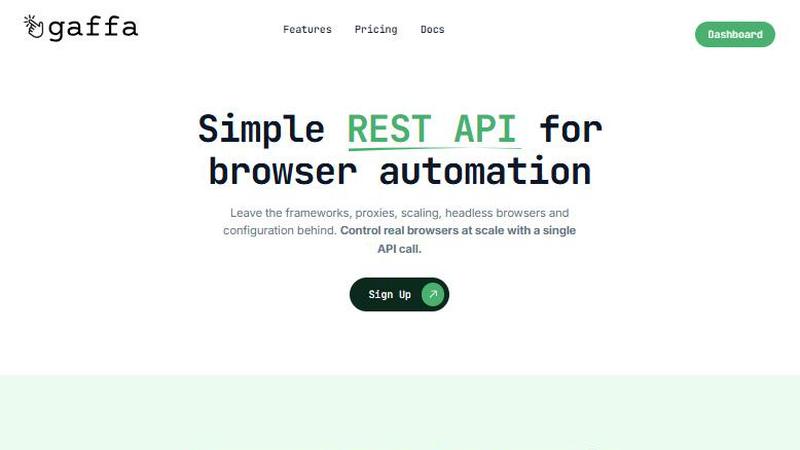
Simple REST API for Browser Automation
Gaffa eliminates the need to navigate complex frameworks, proxies, and configurations. With just a single API call, users can control real browsers at scale, streamlining the process of web data automation.
Real Browser Automation
With built-in JavaScript rendering, Gaffa executes tasks in the same manner a human would. Users can scrape, print web pages, and capture screenshots without experiencing the quirks associated with headless browsers, ensuring accurate and reliable results.
Full Observability
Gaffa records all automation processes, allowing users to easily monitor and comprehend the automation journey. This transparency enhances debugging and ensures users can track every step taken during data extraction.
Comprehensive Data Processing
Not only does Gaffa retrieve web pages, but it also intelligently processes the data into simplified HTML, LLM-ready markdown, or creates self-contained offline versions of pages. This versatility enhances usability and ensures data is ready for immediate application.
qtrl.ai
Autonomous QA Agents
qtrl.ai’s autonomous QA agents are designed to execute instructions on demand or continuously, operating seamlessly across various environments. These agents provide real browser execution rather than mere simulations, ensuring accurate and reliable testing outcomes. Teams can define rules and parameters, allowing the agents to operate within a controlled framework while delivering scalable testing solutions.
Enterprise-Grade Test Management
The platform offers centralized management for test cases, plans, and runs, enabling full traceability and audit trails. This feature supports both manual and automated workflows, making it an essential tool for organizations that prioritize compliance and need to maintain meticulous records of their quality assurance processes. With qtrl.ai, teams can efficiently organize their testing efforts while ensuring adherence to regulatory standards.
Progressive Automation
qtrl.ai allows teams to start with human-written testing instructions, gradually transitioning to AI-generated tests as they become more comfortable with automation. The platform intelligently suggests new tests based on coverage gaps, fostering a collaborative environment where QA professionals can review, approve, and refine tests at every step. This progressive approach to automation enhances both control and efficiency.
Adaptive Memory
Equipped with adaptive memory, qtrl.ai builds a living knowledge base of the application being tested. It learns from various interactions, including exploration, test execution, and issue resolution, to power smarter, context-aware test generation. This feature ensures that the platform becomes progressively more effective with each interaction, resulting in more intelligent testing processes over time.
Use Cases
Gaffa
Market Research
Businesses can leverage Gaffa to automate the collection of market data, competitor pricing, and product availability from various e-commerce platforms. This allows companies to make informed decisions swiftly and effectively.
Content Aggregation
Content creators and marketers can utilize Gaffa to gather relevant articles, blogs, or news from multiple sources, consolidating information for analysis or repurposing. This streamlines content curation and enhances productivity.
Academic Research
Researchers can harness Gaffa to scrape data from academic journals, databases, and websites for literature reviews or data analysis, facilitating thorough and efficient research without the burden of manual data collection.
Social Media Monitoring
Brands can implement Gaffa to track mentions, sentiments, and trends across social media platforms. By automating this data scraping, companies can respond proactively to customer feedback and market changes.
qtrl.ai
Product-Led Engineering Teams
For product-led engineering teams, qtrl.ai streamlines the testing process, enabling faster releases without sacrificing quality. By providing a robust framework for managing test cases and automating execution, teams can focus on innovation while ensuring their products meet the highest standards of quality assurance.
QA Teams Scaling Beyond Manual Testing
Quality assurance teams that are transitioning from manual testing to more automated processes will find qtrl.ai invaluable. The platform's gradual introduction to automation allows teams to maintain control as they scale their testing efforts, ensuring that they can manage increased workloads efficiently without losing oversight.
Companies Modernizing Legacy QA Workflows
Organizations seeking to modernize their legacy QA workflows can leverage qtrl.ai to bridge the gap between outdated practices and contemporary testing methodologies. With its powerful features and capabilities, qtrl.ai facilitates a smooth transition that enhances testing efficiency and effectiveness.
Enterprises Requiring Governance and Traceability
Enterprises that demand strict governance and traceability in their quality assurance processes benefit significantly from qtrl.ai’s comprehensive management and reporting features. The platform’s built-in audit trails and compliance-oriented design make it an ideal solution for organizations operating in regulated industries.
Overview
About Gaffa
In the intricate and dynamic realm of web data acquisition, Gaffa stands out as a sophisticated solution that simplifies what has traditionally been a complex and labor-intensive process. This powerful API is meticulously crafted for developers, data scientists, and businesses who seek reliable, large-scale access to web data without the operational encumbrances typically associated with such tasks. Gaffa's primary value proposition lies in its ability to abstract away immense technical complexities, adeptly managing the multifaceted challenges of residential proxy rotation, infrastructure scaling, failure management, and data parsing. Users are liberated from the incessant demands of maintaining fragile scraping pipelines. With a straightforward, well-documented REST API, Gaffa empowers users to orchestrate authentic browser automation, mimicking human-like interactions such as scrolling and clicking, and extracting data in multiple formats including raw HTML, LLM-ready markdown, images, or structured JSON. Engineered to excel where other tools fall short, Gaffa incorporates a stealth mode utilizing genuine browsers, automated CAPTCHA resolution, and a global residential proxy network, ensuring seamless data retrieval from even the most fortified websites. This makes Gaffa the definitive choice for those who wish to focus on deriving valuable business insights and developing applications, rather than grappling with the intricacies of web data collection.
About qtrl.ai
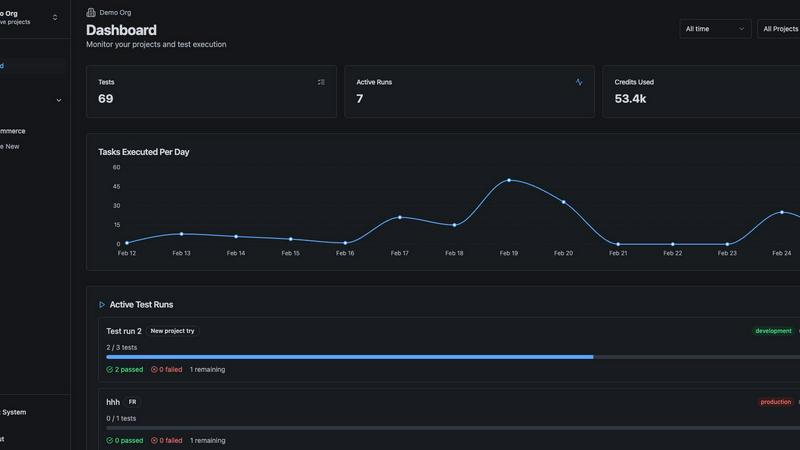
qtrl.ai is an innovative quality assurance platform that redefines the paradigm of software testing by merging robust test management capabilities with the transformative power of artificial intelligence. Designed specifically for software teams, qtrl.ai empowers organizations to scale their quality assurance processes without compromising on control or governance. Its centralized hub facilitates the organization of test cases, meticulous planning of test runs, and comprehensive tracking of quality metrics through real-time dashboards. This ensures that engineering leads and QA managers maintain clear visibility over testing progress, outcomes, and potential risks.
What sets qtrl.ai apart is its thoughtfully integrated AI layer, which allows teams to gradually embrace automation. Rather than imposing a risky, opaque AI-first methodology, qtrl.ai encourages teams to start with manual test management and evolve towards intelligent automation at their own pace. The platform's autonomous agents can generate UI tests from simple English descriptions, adapt them as applications progress, and execute them at scale in diverse environments. With its mission to bridge the chasm between cumbersome manual testing and the fragility of traditional automation, qtrl.ai is perfectly suited for product-led engineering teams, QA groups transitioning from manual testing, organizations modernizing legacy workflows, and enterprises that demand stringent compliance and audit trails. Ultimately, qtrl.ai provides a trusted, intelligent pathway to accelerate quality assurance.
Frequently Asked Questions
Gaffa FAQ
What is a credit worth?
Browser requests are charged based on credits, taking into account request length and proxy bandwidth usage. Each request deducts credits from the user's monthly allowance, ensuring a fair billing system.
Does this app offer a free trial period?
Yes, Gaffa provides a free trial allowing users to experiment with its key features and capabilities through the demo site. This enables potential customers to explore the API thoroughly before committing to a paid plan.
What is the refund policy?
Gaffa offers a refund policy that allows users to request a refund before utilizing any credits in the current month. This ensures that users can make informed decisions without financial risk.
Do credits rollover?
No, any unused credits expire at the end of the billing cycle. Users are encouraged to utilize their credits within the month to maximize the value of their subscription.
qtrl.ai FAQ
How does qtrl.ai ensure control during automation?
qtrl.ai allows teams to maintain control by implementing permissioned autonomy levels. Teams can review, approve, and refine automated tests, ensuring that they only scale what they are comfortable with.
Can qtrl.ai integrate with existing tools?
Yes, qtrl.ai is designed to work seamlessly with existing tools, facilitating easy integration into your current workflows. This adaptability ensures that teams can leverage their existing investments while enhancing their QA capabilities.
What types of testing can qtrl.ai perform?
qtrl.ai supports a wide range of testing types, including manual testing, automated testing, and UI testing generated through its AI capabilities. This versatility makes it suitable for diverse testing needs across various environments.
Is qtrl.ai suitable for enterprises with compliance requirements?
Absolutely. qtrl.ai is built for enterprises that require strict compliance and traceability, featuring enterprise-grade test management capabilities that provide full audit trails and support for regulatory standards.
Alternatives
Gaffa Alternatives
Gaffa is a sophisticated API that belongs to the realm of web data extraction and browser automation. It is engineered to provide developers, data scientists, and businesses with a seamless means of acquiring web data at scale, alleviating the complexities traditionally involved in this process. Despite its elegance, users may seek alternatives due to factors such as pricing, specific feature sets, or the need for compatibility with particular platforms or technologies. When searching for alternatives, it is essential to consider the ease of use, reliability, scalability, and the specific functionalities that align with your unique requirements. An alternative should not only address your immediate data extraction needs but also offer robust support and comprehensive documentation to ensure a smooth integration into your existing workflow.
qtrl.ai Alternatives
qtrl.ai is an advanced quality assurance platform that empowers software teams to enhance their testing efforts through the integration of AI-driven automation while preserving essential governance and control. This innovative solution is positioned within the realm of automation and development tools, catering to organizations that seek to streamline their QA processes without compromising on oversight. Users often explore alternatives to qtrl.ai for various reasons, including pricing structures, specific feature sets, or compatibility with their existing workflows and platforms. When selecting an alternative, it is crucial to consider factors such as the scalability of the solution, the comprehensiveness of its features, ease of integration, and the level of support provided. Ensuring that the alternative aligns with the unique needs of the team will ultimately contribute to a more effective testing process.