HookMesh vs qtrl.ai
Side-by-side comparison to help you choose the right product.

Elevate your SaaS with HookMesh, ensuring seamless webhook delivery, automatic retries, and a user-friendly customer.
Last updated: February 26, 2026

qtrl.ai
qtrl.ai empowers QA teams to scale testing efficiently with AI-driven agents while maintaining complete control and.
Last updated: March 4, 2026
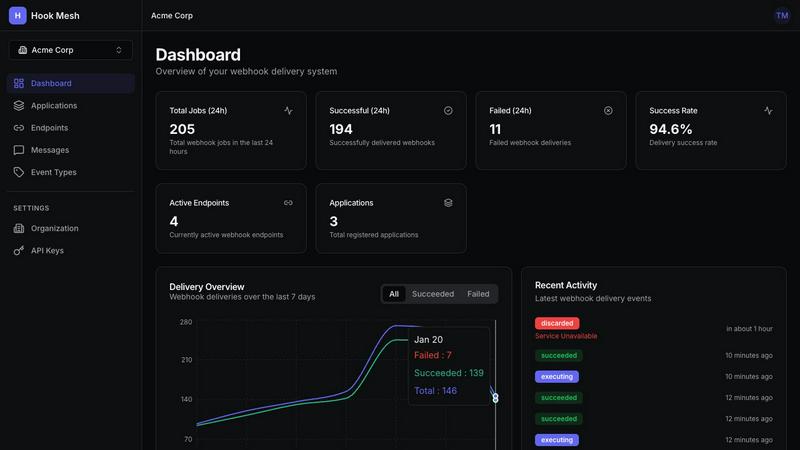
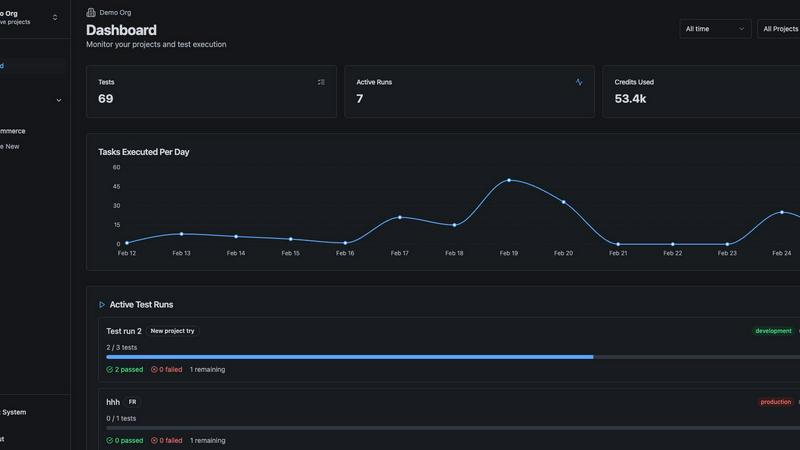
Visual Comparison
HookMesh
qtrl.ai
Feature Comparison
HookMesh
Reliable Delivery
HookMesh ensures that webhooks are never lost, providing automatic retries that intelligently handle failures. With exponential backoff and jitter, the platform attempts delivery for up to 48 hours, safeguarding against transient issues.
Circuit Breaker
This feature automatically disables failing endpoints, preventing them from clogging the delivery queue. Once the endpoint recovers, it is seamlessly re-enabled, ensuring that only functional endpoints are operational.
Customer Portal
Empowering users with a self-service portal, HookMesh offers an embeddable UI for endpoint management. Customers can easily view delivery logs, manage their endpoints, and replay failed webhooks with just one click.
Developer Experience
Designed with developers in mind, HookMesh provides a comprehensive REST API and SDKs for JavaScript, Python, and Go. This enables rapid integration, allowing teams to send webhook events quickly and efficiently while focusing on their primary product objectives.
qtrl.ai
Autonomous QA Agents
qtrl.ai’s autonomous QA agents are designed to execute instructions on demand or continuously, operating seamlessly across various environments. These agents provide real browser execution rather than mere simulations, ensuring accurate and reliable testing outcomes. Teams can define rules and parameters, allowing the agents to operate within a controlled framework while delivering scalable testing solutions.
Enterprise-Grade Test Management
The platform offers centralized management for test cases, plans, and runs, enabling full traceability and audit trails. This feature supports both manual and automated workflows, making it an essential tool for organizations that prioritize compliance and need to maintain meticulous records of their quality assurance processes. With qtrl.ai, teams can efficiently organize their testing efforts while ensuring adherence to regulatory standards.
Progressive Automation
qtrl.ai allows teams to start with human-written testing instructions, gradually transitioning to AI-generated tests as they become more comfortable with automation. The platform intelligently suggests new tests based on coverage gaps, fostering a collaborative environment where QA professionals can review, approve, and refine tests at every step. This progressive approach to automation enhances both control and efficiency.
Adaptive Memory
Equipped with adaptive memory, qtrl.ai builds a living knowledge base of the application being tested. It learns from various interactions, including exploration, test execution, and issue resolution, to power smarter, context-aware test generation. This feature ensures that the platform becomes progressively more effective with each interaction, resulting in more intelligent testing processes over time.
Use Cases
HookMesh
E-Commerce Transactions
In e-commerce platforms, timely delivery of order notifications is critical. HookMesh ensures that webhook events, such as order confirmations and shipping updates, are reliably transmitted, enhancing customer satisfaction and operational efficiency.
Payment Processing
For payment gateways, HookMesh facilitates the secure and consistent delivery of transaction notifications. Its robust infrastructure prevents loss of critical payment events, ensuring that merchants receive timely updates on payment statuses.
SaaS Integrations
HookMesh is ideal for SaaS products that require seamless integration with third-party services. By managing webhook delivery, it allows businesses to maintain smooth operations without excessive manual intervention or technical overhead.
Event-Driven Architectures
In event-driven systems, HookMesh efficiently handles the complexities of event propagation. Its automatic retries and visibility features ensure that events are delivered reliably, allowing applications to respond promptly to changes and user actions.
qtrl.ai
Product-Led Engineering Teams
For product-led engineering teams, qtrl.ai streamlines the testing process, enabling faster releases without sacrificing quality. By providing a robust framework for managing test cases and automating execution, teams can focus on innovation while ensuring their products meet the highest standards of quality assurance.
QA Teams Scaling Beyond Manual Testing
Quality assurance teams that are transitioning from manual testing to more automated processes will find qtrl.ai invaluable. The platform's gradual introduction to automation allows teams to maintain control as they scale their testing efforts, ensuring that they can manage increased workloads efficiently without losing oversight.
Companies Modernizing Legacy QA Workflows
Organizations seeking to modernize their legacy QA workflows can leverage qtrl.ai to bridge the gap between outdated practices and contemporary testing methodologies. With its powerful features and capabilities, qtrl.ai facilitates a smooth transition that enhances testing efficiency and effectiveness.
Enterprises Requiring Governance and Traceability
Enterprises that demand strict governance and traceability in their quality assurance processes benefit significantly from qtrl.ai’s comprehensive management and reporting features. The platform’s built-in audit trails and compliance-oriented design make it an ideal solution for organizations operating in regulated industries.
Overview
About HookMesh
HookMesh is a pioneering platform crafted to revolutionize webhook delivery for modern Software as a Service (SaaS) products. It adeptly navigates the intricacies associated with in-house webhook management, including the challenges of retry logic, circuit breakers, and debugging delivery complications. By leveraging HookMesh, organizations can shift their focus back to their core offerings without the burden of webhook management complexities. This sophisticated solution boasts a robust infrastructure that guarantees reliable webhook delivery, equipped with features such as automatic retries, exponential backoff, and idempotency keys. Tailored for developers and product teams, HookMesh not only enhances user experience but also ensures that webhook events are delivered consistently and reliably. With an intuitive self-service portal, users can manage endpoints effortlessly, gain visibility into delivery status, and replay failed webhooks with a simple click, making HookMesh the quintessential choice for organizations seeking tranquility in their webhook strategy.
About qtrl.ai
qtrl.ai is an innovative quality assurance platform that redefines the paradigm of software testing by merging robust test management capabilities with the transformative power of artificial intelligence. Designed specifically for software teams, qtrl.ai empowers organizations to scale their quality assurance processes without compromising on control or governance. Its centralized hub facilitates the organization of test cases, meticulous planning of test runs, and comprehensive tracking of quality metrics through real-time dashboards. This ensures that engineering leads and QA managers maintain clear visibility over testing progress, outcomes, and potential risks.
What sets qtrl.ai apart is its thoughtfully integrated AI layer, which allows teams to gradually embrace automation. Rather than imposing a risky, opaque AI-first methodology, qtrl.ai encourages teams to start with manual test management and evolve towards intelligent automation at their own pace. The platform's autonomous agents can generate UI tests from simple English descriptions, adapt them as applications progress, and execute them at scale in diverse environments. With its mission to bridge the chasm between cumbersome manual testing and the fragility of traditional automation, qtrl.ai is perfectly suited for product-led engineering teams, QA groups transitioning from manual testing, organizations modernizing legacy workflows, and enterprises that demand stringent compliance and audit trails. Ultimately, qtrl.ai provides a trusted, intelligent pathway to accelerate quality assurance.
Frequently Asked Questions
HookMesh FAQ
What are webhooks and why are they important?
Webhooks are automated messages sent from apps when something happens. They allow for real-time communication between services, enabling efficient data transfer and notifications that enhance user experiences.
How does HookMesh handle webhook delivery failures?
HookMesh employs automatic retries with exponential backoff and jitter to manage delivery failures. If an endpoint fails, it is auto-disabled, and once it recovers, it is re-enabled, ensuring reliable event delivery.
Can customers manage their own endpoints?
Yes, HookMesh provides a self-service portal that allows customers to manage their endpoints, view delivery logs, and replay failed webhooks, giving them full control and transparency.
Is there a free tier available for HookMesh?
Absolutely, HookMesh offers a free tier that includes 5,000 webhooks per month with no credit card required, allowing businesses to explore its features without any financial commitment.
qtrl.ai FAQ
How does qtrl.ai ensure control during automation?
qtrl.ai allows teams to maintain control by implementing permissioned autonomy levels. Teams can review, approve, and refine automated tests, ensuring that they only scale what they are comfortable with.
Can qtrl.ai integrate with existing tools?
Yes, qtrl.ai is designed to work seamlessly with existing tools, facilitating easy integration into your current workflows. This adaptability ensures that teams can leverage their existing investments while enhancing their QA capabilities.
What types of testing can qtrl.ai perform?
qtrl.ai supports a wide range of testing types, including manual testing, automated testing, and UI testing generated through its AI capabilities. This versatility makes it suitable for diverse testing needs across various environments.
Is qtrl.ai suitable for enterprises with compliance requirements?
Absolutely. qtrl.ai is built for enterprises that require strict compliance and traceability, featuring enterprise-grade test management capabilities that provide full audit trails and support for regulatory standards.
Alternatives
HookMesh Alternatives
HookMesh is a sophisticated platform designed to enhance webhook delivery for SaaS applications, streamlining the complexities associated with managing webhooks in-house. It provides reliable delivery mechanisms, automatic retries, and a self-service portal that empowers users to engage with their webhook events seamlessly. As the demands of businesses evolve, users often seek alternatives to HookMesh for various reasons, including pricing considerations, specific feature requirements, or compatibility with diverse platform needs. When exploring alternatives, it is crucial to assess the reliability of delivery mechanisms, the user experience provided by the customer portal, and the overall flexibility of the solution. Users should prioritize platforms that offer robust support for managing webhook events while ensuring transparency and control. Evaluating these aspects will enable businesses to find a solution that aligns with their unique requirements and enhances their webhook strategy.
qtrl.ai Alternatives
qtrl.ai is an advanced quality assurance platform that empowers software teams to enhance their testing efforts through the integration of AI-driven automation while preserving essential governance and control. This innovative solution is positioned within the realm of automation and development tools, catering to organizations that seek to streamline their QA processes without compromising on oversight. Users often explore alternatives to qtrl.ai for various reasons, including pricing structures, specific feature sets, or compatibility with their existing workflows and platforms. When selecting an alternative, it is crucial to consider factors such as the scalability of the solution, the comprehensiveness of its features, ease of integration, and the level of support provided. Ensuring that the alternative aligns with the unique needs of the team will ultimately contribute to a more effective testing process.