Mod vs Requestly
Side-by-side comparison to help you choose the right product.

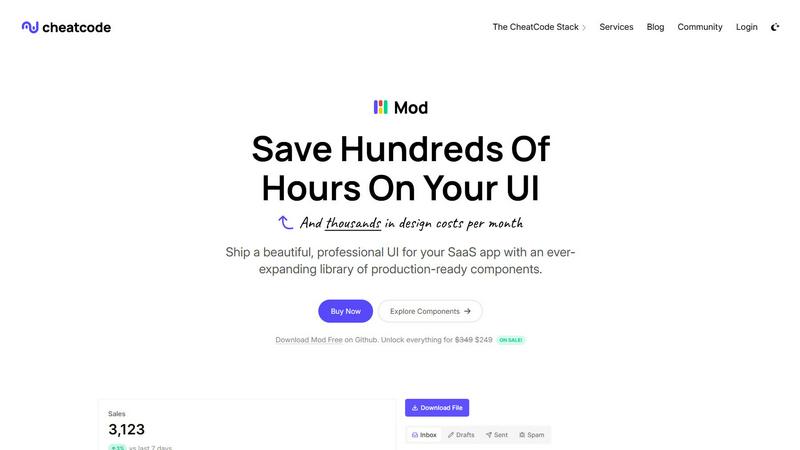
Mod is a sophisticated CSS framework for building premium SaaS interfaces with speed and elegance.

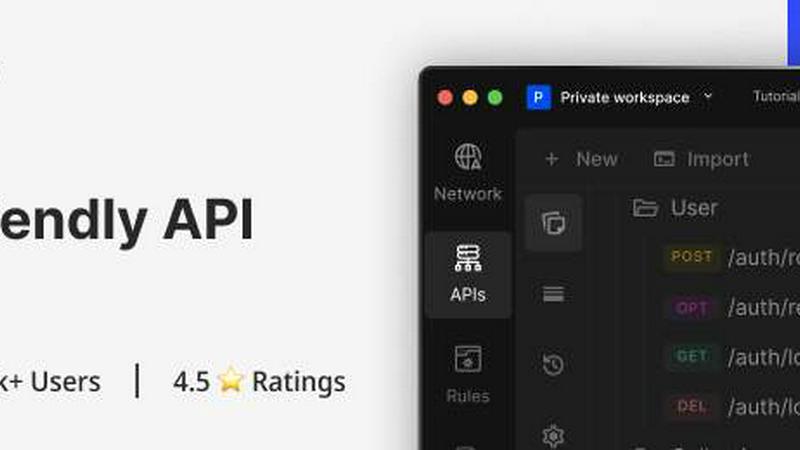
Requestly is a sophisticated, git-native API client that enables effortless testing and seamless collaboration without requiring a login.
Last updated: April 4, 2026
Visual Comparison
Mod
Requestly
Feature Comparison
Mod
A Curated Library of 88+ Components
Mod offers an extensive, pre-built collection of over 88 essential UI components, each meticulously designed for SaaS applications. This includes everything from complex data tables, dashboards, and subscription modals to simpler elements like buttons, forms, and navigation bars. Every component is constructed with accessibility, responsiveness, and developer ergonomics in mind, providing a robust foundation that requires minimal customization to deploy. This comprehensive suite ensures you spend zero time reinventing common interface elements, allowing for rapid assembly of complex, functional pages.
Framework-Agnostic Flexibility
Designed for maximum versatility, Mod operates independently of any specific JavaScript framework or backend technology. Its pure CSS foundation, coupled with well-structured HTML examples, ensures seamless integration with popular frontend ecosystems like Next.js, Nuxt, Svelte, and Vite, as well as backend-rendered platforms such as Ruby on Rails and Django. This agnostic approach future-proofs your investment, granting developers the freedom to choose their preferred tech stack without being locked into a proprietary component system or facing arduous migration paths.
Dual-Themed with Full Dark Mode Support
Mod ships with two beautifully coordinated themes—light and dark—engineered from the ground up for visual harmony and readability. The built-in dark mode is not an afterthought but a first-class citizen, with every component and icon thoughtfully adapted for optimal contrast and aesthetic appeal. Implementing theme switching becomes a trivial task, enabling you to meet modern user expectations for personalized interface preferences and reduce eye strain, thereby enhancing the overall sophistication and usability of your application.
Mobile-First, Responsive Design Philosophy
Every component and layout within Mod is built upon a strict mobile-first, responsive design philosophy. The system utilizes a flexible grid and intelligent spacing scales that gracefully adapt from the smallest mobile viewport to the largest desktop display. This ensures that the SaaS applications you build deliver a flawless, intuitive experience across all devices without requiring additional media query wrangling or layout adjustments, guaranteeing your product looks and performs impeccably for every user, everywhere.
Requestly
Git-Native API Collections
Requestly transforms API collection management by storing everything as local files on your machine. This Git-native approach allows you to version control your collections directly with Git, enabling seamless branching, merging, and peer reviews. Collaborate like a developer by pushing changes to a repository, ensuring every modification is tracked, reversible, and integrated into your team's established CI/CD workflows without relying on proprietary cloud sync.
Local-First & Secure Workspaces
Prioritizing data sovereignty and security, Requestly operates on a local-first principle. All your workspaces, request history, and configurations are stored directly on your computer, never on external servers without your explicit consent. This provides unparalleled privacy, eliminates latency associated with cloud synchronization, and ensures you retain complete ownership and control over your intellectual property and sensitive API data at all times.
AI-Enhanced API Development
Embedded artificial intelligence elevates the entire API interaction process. Requestly's AI assists in intelligently writing and refining requests, auto-generating comprehensive test cases, and providing insightful debugging suggestions. This reduces manual, repetitive tasks, accelerates development cycles, and helps developers identify issues faster, making complex API workflows more intuitive and significantly more productive.
Comprehensive REST & GraphQL Support
Requestly delivers a unified, powerful client for both REST and modern GraphQL APIs. It features advanced capabilities such as GraphQL schema introspection and auto-completion for queries. For all API types, it supports environment variables, pre-request and post-response scripts for dynamic request manipulation, and a centralized authorization manager, providing a fully-featured playground for any API paradigm.
Use Cases
Mod
Rapid Prototyping and MVP Development
For entrepreneurs and solo developers validating a new SaaS concept, speed is the ultimate currency. Mod is the perfect catalyst for rapid prototyping and Minimum Viable Product (MVP) development. By leveraging its pre-designed components and themes, you can transform wireframes into a fully functional, polished prototype in a fraction of the traditional time. This allows you to gather crucial user feedback, demonstrate viability to stakeholders, and iterate on core functionality without getting bogged down in interface design decisions.
Scaling Design Consistency Across Teams
As development teams grow, maintaining visual and functional consistency across an application becomes increasingly challenging. Mod serves as a single source of truth for your UI, providing a standardized design system that all developers can utilize. This eliminates style fragmentation, ensures a uniform brand experience, and dramatically reduces the time spent on code reviews for frontend styling. It empowers teams to scale development efforts efficiently while preserving a high-quality, cohesive user interface.
Modernizing Legacy Application Interfaces
Revitalizing the user interface of an existing, legacy SaaS application can be a daunting and resource-intensive project. Mod offers a strategic path to modernization. Its framework-agnostic CSS can be incrementally adopted, allowing teams to replace outdated components section-by-section with Mod's contemporary, responsive equivalents. This approach minimizes risk and disruption, enabling a gradual but significant uplift in user experience and perceived product quality without a complete, costly rewrite.
Building Internal Admin Dashboards and Tools
The need for clean, functional, and efficient internal tools is universal for SaaS companies. Mod is exceptionally well-suited for constructing admin panels, customer relationship management (CRM) views, and operational dashboards. Its data-rich components like tables, charts, and filters, combined with a logical layout system, enable developers to quickly assemble powerful internal interfaces that are both aesthetically pleasing and highly usable, improving operational efficiency without diverting precious design resources.
Requestly
Development Teams Requiring Enterprise Security
For organizations in regulated industries or with stringent data governance policies, Requestly's local-first, Git-native model is ideal. It allows teams to maintain API collections within their own secure version control systems, ensuring compliance, enabling audit trails through Git history, and providing peace of mind that sensitive API data never leaves the company's controlled environment without explicit permission.
Seamless Migration from Postman
Teams feeling constrained by bloated, cloud-dependent tools can execute a frictionless transition to Requestly. With a one-click import for Postman collections and environments, developers can instantly migrate their existing workflows without losing scripts or configurations. This offers an immediate upgrade to a faster, more controllable, and privacy-focused development experience without disrupting ongoing projects.
Collaborative API Design and Testing
Requestly facilitates sophisticated collaboration within development and QA teams through its free shared workspaces and role-based access control. Team members can jointly work on API collections, review changes via Git, and manage permissions as Admins, Editors, or Viewers. This streamlines the process of designing, testing, and documenting APIs in a unified, version-controlled environment.
Individual Developers and Open Source Contributors
For solo developers, freelancers, or open-source contributors, Requestly's zero-login-required, lightweight client is perfect. It allows for instant startup without account creation, keeps local workspaces organized, and enables easy sharing of API collections via simple file exchange or Git repositories. This simplicity and power make it an excellent tool for personal projects and public collaborations.
Overview
About Mod
Mod is an exquisitely crafted CSS framework and component library, meticulously designed for the modern SaaS builder. It transcends the limitations of generic UI kits by offering a sophisticated, opinionated system specifically engineered for the unique demands of software-as-a-service applications. At its core, Mod provides developers with a comprehensive visual language—a cohesive collection of 88+ production-ready components, 168 distinct styles, and two elegant themes (light and dark)—that instantly elevates user interface quality. This framework-agnostic solution seamlessly integrates with the leading technology stacks, including Next.js, Nuxt, Vite, Svelte, Rails, and Django, ensuring flexibility without compromise. Tailored for solo developers, startups, and established teams alike, Mod's primary value proposition is profound acceleration. It eliminates the endless cycles of design deliberation, custom CSS authorship, and component assembly, allowing creators to channel their energy into core product logic and user experience. By providing a polished, responsive, and mobile-first foundation out of the box, complete with over 1,500 curated icons, Mod dramatically reduces time-to-market and design costs, empowering you to ship professional, investor-ready, and user-delighting SaaS applications with unprecedented speed and confidence.
About Requestly
Requestly redefines the landscape of API development tools by championing a philosophy of developer sovereignty, speed, and seamless collaboration. It is a modern, lightweight API client meticulously engineered for development teams who demand uncompromising control over their data and workflows. Departing from the conventional cloud-centric model, Requestly adopts a pioneering local-first architecture. This ensures all your API collections, environment variables, and sensitive data reside securely on your local machine, eliminating data privacy concerns and vendor lock-in. Its core innovation lies in being Git-native; collections are stored as simple files, enabling effortless version control, branching, and collaboration through existing Git repositories, a paradigm familiar to every developer. Augmented with integrated AI capabilities, Requestly accelerates the entire API lifecycle—from crafting requests and generating tests to sophisticated debugging—for both REST and GraphQL APIs. With no mandatory login, it offers instant access, while its generous free tier includes shared workspaces and role-based access control, fostering team synergy without friction. Trusted by over 300,000 developers from industry leaders like Microsoft and Google, Requestly stands as the sophisticated, efficient, and secure alternative to bloated API clients, empowering teams to build and innovate at their peak velocity.
Frequently Asked Questions
Mod FAQ
Is Mod compatible with React/Vue/Svelte?
Absolutely. Mod is fundamentally a CSS framework with accompanying HTML structure examples, making it fully compatible with any frontend framework, including React, Vue, Svelte, and others. You integrate Mod by applying its CSS classes to your framework's components. The provided HTML snippets serve as a direct reference for the required DOM structure, allowing you to easily translate them into your framework's templating syntax, ensuring a smooth and flexible integration process.
How does Mod handle customization and branding?
Mod is built to be both beautifully opinionated and thoughtfully extensible. While it provides a complete, polished visual system out of the box, it is designed for easy customization. The framework uses CSS custom properties (variables) for key design tokens like colors, spacing, and typography, allowing you to override them to match your brand identity seamlessly. You can layer your custom CSS on top of Mod's foundation to create unique variations without breaking the core system or losing its responsive benefits.
What is included in the yearly updates?
A purchase of Mod grants access to a year of updates, which include new components, additional style variants, enhancements to existing components for accessibility and browser compatibility, and any refinements to the core framework. These updates ensure your toolkit evolves alongside modern web standards and design trends, providing ongoing value and keeping your applications current. The update model is designed to provide sustained improvement without unexpected costs or subscription fatigue.
Do I need design experience to use Mod effectively?
Not at all. Mod is specifically engineered to empower developers who may not have extensive design expertise. It encapsulates complex design principles—such as typographic scale, color harmony, spacing rhythm, and responsive behavior—into a ready-to-use system. By following the provided documentation and using the components as intended, developers can achieve professional, designer-grade results. It effectively bridges the gap between development and design, reducing reliance on a dedicated designer for standard interface elements.
Requestly FAQ
How does Requestly handle data privacy and storage?
Requestly employs a strict local-first architecture. By default, all your data—including API collections, environment variables, and request logs—is stored exclusively on your local machine. Nothing is sent to or stored on Requestly's servers unless you explicitly choose to use a cloud sync feature for collaboration. This design ensures maximum data privacy, security, and user control.
Can I import my existing collections from Postman?
Yes, migrating to Requestly is designed to be effortless. The tool provides a direct, one-click import function specifically for Postman. You can seamlessly bring in your complete Postman collections, including all associated environments, variables, and pre-request/post-response scripts, allowing you to continue your work immediately without any manual reconstruction.
Is team collaboration really free in Requestly?
Absolutely. Requestly's free tier includes robust collaboration features that many competitors reserve for paid plans. You can create shared workspaces, invite team members, and utilize role-based access control (Admin, Editor, Viewer) at no cost. Collaboration is facilitated through Git for versioning or through shared cloud workspaces, making it a powerful free offering for teams.
How does the Git integration work?
Requestly treats API collections as standard file folders on your system. You can initialize a Git repository in any workspace directory. From there, you use standard Git commands (or your preferred Git GUI) to commit changes, push to remote repositories like GitHub or GitLab, create branches, and merge pull requests. This integrates API development directly into your software development lifecycle.