Playwriter vs qtrl.ai
Side-by-side comparison to help you choose the right product.

Playwriter
Playwriter seamlessly empowers agents to control Chrome with AI, leveraging existing sessions for enhanced performance and flexibility.
Last updated: March 18, 2026

qtrl.ai
qtrl.ai empowers QA teams to scale testing efficiently with AI-driven agents while maintaining complete control and.
Last updated: March 4, 2026
Visual Comparison
Playwriter

qtrl.ai
Feature Comparison
Playwriter
Full Browser Session Access
Playwriter grants AI agents direct control over your existing browser session, encompassing all your cookies, logins, and extensions. This ensures that agents can operate without the limitations of fresh instances, allowing for smooth and efficient web interactions.
Comprehensive Automation API
With a straightforward one-tool approach, Playwriter exposes the full Playwright API. This eliminates the need for complex wrappers and provides agents with direct access to any Playwright code, simplifying the automation process while reducing contextual overhead.
Real-Time Collaboration
Playwriter facilitates a unique collaborative environment where users can monitor and interact with agents in real-time. When an agent encounters obstacles, such as CAPTCHAs or consent walls, users can step in instantly, ensuring smooth navigation and task completion without losing momentum.
Advanced Debugger and Editor
The integrated debugger allows for live code editing and performance profiling, enabling users to set breakpoints and intercept network requests. This feature empowers users to troubleshoot issues on-the-fly, enhancing the overall effectiveness of automated browsing tasks.
qtrl.ai
Autonomous QA Agents
qtrl.ai’s autonomous QA agents are designed to execute instructions on demand or continuously, operating seamlessly across various environments. These agents provide real browser execution rather than mere simulations, ensuring accurate and reliable testing outcomes. Teams can define rules and parameters, allowing the agents to operate within a controlled framework while delivering scalable testing solutions.
Enterprise-Grade Test Management
The platform offers centralized management for test cases, plans, and runs, enabling full traceability and audit trails. This feature supports both manual and automated workflows, making it an essential tool for organizations that prioritize compliance and need to maintain meticulous records of their quality assurance processes. With qtrl.ai, teams can efficiently organize their testing efforts while ensuring adherence to regulatory standards.
Progressive Automation
qtrl.ai allows teams to start with human-written testing instructions, gradually transitioning to AI-generated tests as they become more comfortable with automation. The platform intelligently suggests new tests based on coverage gaps, fostering a collaborative environment where QA professionals can review, approve, and refine tests at every step. This progressive approach to automation enhances both control and efficiency.
Adaptive Memory
Equipped with adaptive memory, qtrl.ai builds a living knowledge base of the application being tested. It learns from various interactions, including exploration, test execution, and issue resolution, to power smarter, context-aware test generation. This feature ensures that the platform becomes progressively more effective with each interaction, resulting in more intelligent testing processes over time.
Use Cases
Playwriter
Automated Testing
Playwriter is an invaluable tool for developers conducting automated testing of web applications. By allowing agents to navigate through your actual browser session, it ensures that tests are executed in a realistic environment, providing accurate results and reducing false positives.
Data Scraping
For data analysts and researchers, Playwriter facilitates seamless data scraping tasks. Agents can access dynamic content, fill forms, and interact with web pages as a real user would, thus extracting valuable information efficiently.
Workflow Automation
Businesses can leverage Playwriter to automate repetitive tasks such as form submissions, online purchases, or account management. By delegating these tasks to AI agents while retaining full control, organizations can optimize their workflows and focus on more strategic initiatives.
User Experience Analysis
Playwriter allows UX researchers to observe how agents interact with web applications, providing insights into user behavior and identifying potential areas for improvement. This capability fosters data-driven decisions that enhance overall user engagement and satisfaction.
qtrl.ai
Product-Led Engineering Teams
For product-led engineering teams, qtrl.ai streamlines the testing process, enabling faster releases without sacrificing quality. By providing a robust framework for managing test cases and automating execution, teams can focus on innovation while ensuring their products meet the highest standards of quality assurance.
QA Teams Scaling Beyond Manual Testing
Quality assurance teams that are transitioning from manual testing to more automated processes will find qtrl.ai invaluable. The platform's gradual introduction to automation allows teams to maintain control as they scale their testing efforts, ensuring that they can manage increased workloads efficiently without losing oversight.
Companies Modernizing Legacy QA Workflows
Organizations seeking to modernize their legacy QA workflows can leverage qtrl.ai to bridge the gap between outdated practices and contemporary testing methodologies. With its powerful features and capabilities, qtrl.ai facilitates a smooth transition that enhances testing efficiency and effectiveness.
Enterprises Requiring Governance and Traceability
Enterprises that demand strict governance and traceability in their quality assurance processes benefit significantly from qtrl.ai’s comprehensive management and reporting features. The platform’s built-in audit trails and compliance-oriented design make it an ideal solution for organizations operating in regulated industries.
Overview
About Playwriter
Playwriter is an innovative tool designed to revolutionize the way AI agents interact with web environments by providing them with seamless access to a user's actual browser session. Unlike traditional solutions that rely on separate instances of Chrome with no logins or extensions, Playwriter allows agents to harness the full capabilities of your existing browser, complete with all your preferences, extensions, and logged-in accounts. This comprehensive integration ensures that agents can perform tasks with minimal friction, significantly enhancing their efficiency and accuracy. Ideal for developers, testers, and enterprises that leverage automation, Playwriter optimizes workflows by enabling real-time collaboration between human users and AI. With its sophisticated features such as network interception, live code editing, and accessibility snapshots, Playwriter stands out as a premier solution for automated browsing tasks, ensuring that critical interactions remain under human control while maximizing the capabilities of AI.
About qtrl.ai
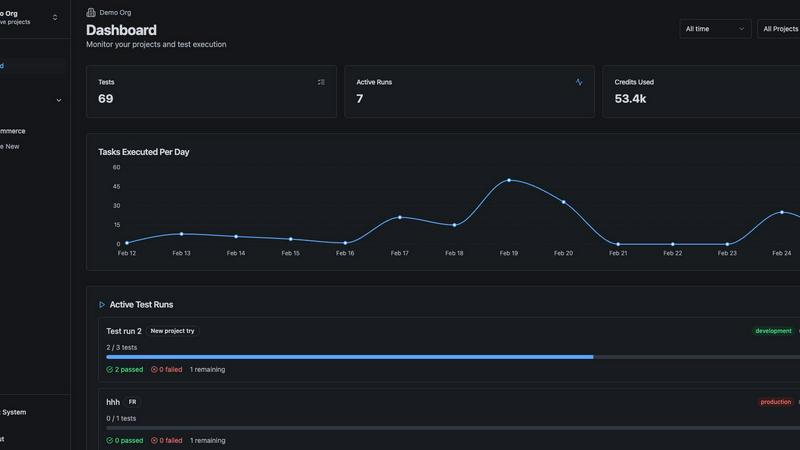
qtrl.ai is an innovative quality assurance platform that redefines the paradigm of software testing by merging robust test management capabilities with the transformative power of artificial intelligence. Designed specifically for software teams, qtrl.ai empowers organizations to scale their quality assurance processes without compromising on control or governance. Its centralized hub facilitates the organization of test cases, meticulous planning of test runs, and comprehensive tracking of quality metrics through real-time dashboards. This ensures that engineering leads and QA managers maintain clear visibility over testing progress, outcomes, and potential risks.
What sets qtrl.ai apart is its thoughtfully integrated AI layer, which allows teams to gradually embrace automation. Rather than imposing a risky, opaque AI-first methodology, qtrl.ai encourages teams to start with manual test management and evolve towards intelligent automation at their own pace. The platform's autonomous agents can generate UI tests from simple English descriptions, adapt them as applications progress, and execute them at scale in diverse environments. With its mission to bridge the chasm between cumbersome manual testing and the fragility of traditional automation, qtrl.ai is perfectly suited for product-led engineering teams, QA groups transitioning from manual testing, organizations modernizing legacy workflows, and enterprises that demand stringent compliance and audit trails. Ultimately, qtrl.ai provides a trusted, intelligent pathway to accelerate quality assurance.
Frequently Asked Questions
Playwriter FAQ
How does Playwriter ensure security during browsing?
Playwriter connects to a local WebSocket relay on your machine, meaning that no data is sent to external servers. This keeps your browsing secure and private, as all interactions remain within your local environment.
Can I use Playwriter with other tools or frameworks?
Yes, Playwriter is compatible with various MCP clients, including Cursor, Claude, and VS Code. This flexibility allows users to incorporate Playwriter into their existing workflows seamlessly.
What are the technical requirements for using Playwriter?
To use Playwriter, users must have the Chrome browser installed along with Node.js. The installation process involves adding a Chrome extension and setting up the CLI, which is straightforward and efficient.
Is Playwriter open source?
Absolutely. Playwriter is open source and released under the MIT license, allowing users to modify and adapt the tool according to their specific needs, thereby fostering a collaborative development environment.
qtrl.ai FAQ
How does qtrl.ai ensure control during automation?
qtrl.ai allows teams to maintain control by implementing permissioned autonomy levels. Teams can review, approve, and refine automated tests, ensuring that they only scale what they are comfortable with.
Can qtrl.ai integrate with existing tools?
Yes, qtrl.ai is designed to work seamlessly with existing tools, facilitating easy integration into your current workflows. This adaptability ensures that teams can leverage their existing investments while enhancing their QA capabilities.
What types of testing can qtrl.ai perform?
qtrl.ai supports a wide range of testing types, including manual testing, automated testing, and UI testing generated through its AI capabilities. This versatility makes it suitable for diverse testing needs across various environments.
Is qtrl.ai suitable for enterprises with compliance requirements?
Absolutely. qtrl.ai is built for enterprises that require strict compliance and traceability, featuring enterprise-grade test management capabilities that provide full audit trails and support for regulatory standards.
Alternatives
Playwriter Alternatives
Playwriter is an innovative automation tool designed to enhance user interaction with Chrome through the power of artificial intelligence. It operates within the realm of automation, providing users with a unique control interface via command line or MCP, allowing AI agents to utilize their actual browser sessions. This capability addresses the limitations faced by many AI solutions that struggle with browser access and user authentication. As users explore alternatives to Playwriter, they often seek options that better align with their specific needs, whether driven by pricing, feature sets, or platform compatibility. When selecting a suitable alternative, consider the core functionalities that matter most to you, such as ease of integration, automation capabilities, support for various clients, and the overall user experience. The right choice will ultimately depend on your individual requirements and the specific tasks you wish to automate.
qtrl.ai Alternatives
qtrl.ai is an advanced quality assurance platform that empowers software teams to enhance their testing efforts through the integration of AI-driven automation while preserving essential governance and control. This innovative solution is positioned within the realm of automation and development tools, catering to organizations that seek to streamline their QA processes without compromising on oversight. Users often explore alternatives to qtrl.ai for various reasons, including pricing structures, specific feature sets, or compatibility with their existing workflows and platforms. When selecting an alternative, it is crucial to consider factors such as the scalability of the solution, the comprehensiveness of its features, ease of integration, and the level of support provided. Ensuring that the alternative aligns with the unique needs of the team will ultimately contribute to a more effective testing process.