LoadTester
LoadTester is a sophisticated cloud-native platform for engineering teams to orchestrate distributed HTTP and API load tests without infrastructure.
Visit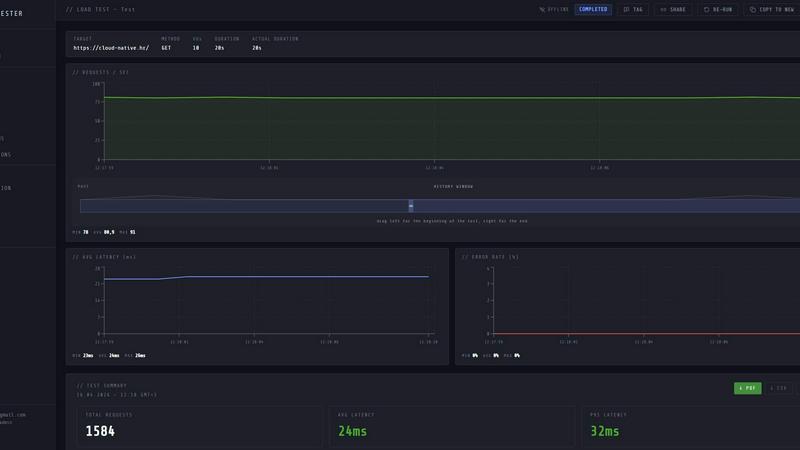
About LoadTester
LoadTester is a sophisticated, modern HTTP and API load testing platform engineered by Cloud Native d.o.o. for engineering teams that demand repeatable, reliable performance validation without the burden of infrastructure management. It serves as a comprehensive solution for developers, QA engineers, site reliability teams, and DevOps practitioners who need to conduct rigorous performance testing on web applications, APIs, and microservices. The platform eliminates the traditional complexities of setting up, configuring, and maintaining load testing infrastructure, offering instead a streamlined, cloud-native experience that launches distributed tests in under three seconds. Users can create tests, choose between virtual users or requests per second as their load model, monitor live latency metrics and error rates in real time, review detailed completed results, compare runs to detect regressions, and export findings for stakeholder communication. LoadTester supports up to 10,000 virtual users and 10,000 requests per second per test, with auto-scaling worker distribution, smart auto-stop thresholds, and comprehensive integrations including CI/CD pipelines, webhooks, Slack, and email alerts. The platform is built for teams that want simple, repeatable performance checks that fit naturally into existing development workflows, enabling them to catch performance regressions before users ever notice.
Features of LoadTester
Instant Distributed Execution
LoadTester launches distributed load tests in under three seconds from cold start to first request, eliminating the need for any infrastructure setup, worker orchestration, or scheduling configuration. The platform automatically scales workers across distributed nodes, handling all coordination and execution flow so teams can focus entirely on interpreting results rather than managing test infrastructure. Tests begin immediately without queue delays.
Live Real-Time Analytics
During any active test, LoadTester provides streaming telemetry including requests per second, latency distributions at p50, p95, and p99 percentiles, active virtual user counts, and error rates. These live charts update continuously rather than appearing minutes after the run completes, enabling teams to observe bottlenecks and performance anomalies as they occur and make informed decisions about stopping or adjusting tests in real time.
Smart Thresholds and Auto-Stop
LoadTester enables users to define precise guardrails for performance and reliability, including p95 latency limits, error rate caps, and regression thresholds compared against baseline runs. When any threshold is breached, the platform can automatically stop the test to prevent wasted resources or further degradation. Additionally, webhooks can trigger on completion to integrate results directly into release pipelines and notification systems.
Comprehensive Integration and Automation
The platform supports full CI/CD integration, allowing teams to run performance tests on every deploy as part of their automated pipelines. Scheduled tests run at defined intervals, and results can be exported in PDF, CSV, or JSON formats for reporting. Slack and email alerts notify teams of threshold breaches or regressions, while webhooks enable custom workflow integrations with release bots and other tooling.
Use Cases of LoadTester
Pre-Release Performance Validation
Engineering teams use LoadTester to validate that new code deployments meet performance Service Level Objectives before reaching production. By running scheduled baseline tests nightly or on every commit, teams can compare current performance against historical baselines and automatically detect regressions in latency, throughput, or error rates. This proactive approach prevents performance degradations from affecting end users and maintains consistent application responsiveness.
Spike and Stress Testing for E-Commerce
E-commerce platforms and high-traffic applications leverage LoadTester to simulate sudden traffic spikes during checkout flows, product searches, or promotional events. The platform's ability to generate up to 10,000 requests per second with distributed workers allows teams to understand how their infrastructure behaves under extreme load, identify bottlenecks in payment processing or inventory APIs, and ensure capacity planning is accurate before major sales events.
API Gateway and Microservices Benchmarking
Organizations with complex microservice architectures use LoadTester to benchmark individual API endpoints, API gateways, and internal service-to-service communication channels. By isolating specific endpoints and measuring latency distributions, error rates, and throughput under controlled load, teams can pinpoint which services require optimization, validate service level agreements between internal teams, and ensure that new service versions do not introduce performance regressions.
Continuous Performance Monitoring in CI/CD
DevOps and platform engineering teams integrate LoadTester directly into their continuous integration and continuous deployment pipelines to automatically run performance tests on every pull request or merge. This enables immediate feedback on the performance impact of code changes, prevents performance regressions from reaching production, and maintains a historical record of application performance over time. Webhooks and Slack notifications ensure the entire team stays informed of results.
Frequently Asked Questions
How quickly can I start my first load test?
LoadTester launches distributed load tests in under three seconds from cold start to first request. There is no infrastructure to provision, no workers to configure, and no scheduling setup required. Simply create a test scenario, select your target URL and load parameters, and hit run from the dashboard or via the API.
What load models does LoadTester support?
LoadTester supports both Virtual Users (VUs) and Requests Per Second (RPS) as load models. The VU mode simulates a fixed number of concurrent users making requests, which is ideal for modeling real user behavior. The RPS mode maintains a constant request rate, which is useful for throughput benchmarking and capacity planning.
Can I integrate LoadTester with my CI/CD pipeline?
Yes, LoadTester is built for CI/CD integration. You can trigger tests programmatically via the API, schedule recurring tests at defined intervals, and configure webhooks to send results to your release bots, Slack channels, or email distribution lists. The platform supports automated threshold evaluation so tests can pass or fail builds based on performance criteria.
How does LoadTester handle test failures or threshold breaches?
LoadTester provides smart auto-stop capabilities. You can define thresholds for p95 latency, error rate, and regression compared to baseline runs. When any threshold is breached, the test can automatically stop to prevent resource waste. Additionally, notifications can be sent via Slack, email, or webhook to alert your team immediately.
Similar to LoadTester

Firma.dev
Pay-as-you-go e-signature API and no-code sending. €0.049 per envelope, no monthly minimums, legally valid in 55+ countries.

AIQualityHQ
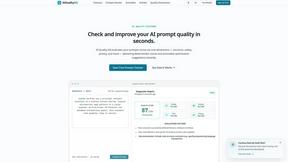
AIQualityHQ delivers instant, deterministic prompt quality analysis across six dimensions to ensure structure, safety, and privacy.