

Alternatives to Ember
Ember delivers daily AI market calls with public, uneditable scores, flagging high-conviction signals when three AIs diverge from real-money crowds.
20 alternatives found



Hishab
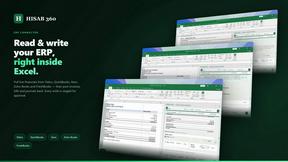
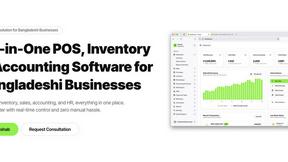
Hishab is business software for Bangladeshi shops and SMEs — POS billing, inventory, customer due, accounting, and reports in one system.
Flan
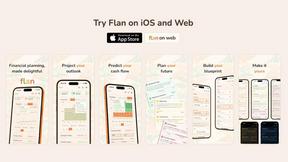
Visual financial timelines for couples and young professionals: model cash flow, life events, and shared goals.



IZIPAY
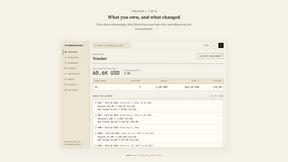
IZIPAY is a virtual and physical crypto card service that lets users top up with digital assets and pay online like with a regular card.
Venduris
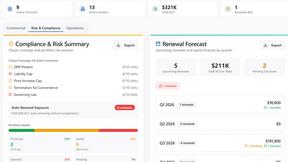
Venduris is a renewal intelligence platform that gives mid-size companies control over SaaS & AI contract renewals before leverage disappears.

the calcolo iva
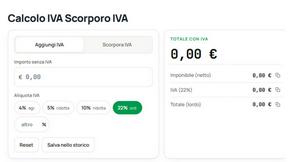
Free Italian VAT calculator and tax guides, built for freelancers and businesses.
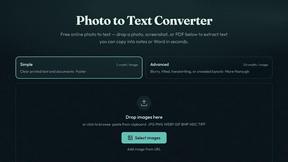
Photo to Text
Free online AI photo to text converter. Instantly extract text from screenshots, handwritten notes, and PDFs into editable Word or Excel files.
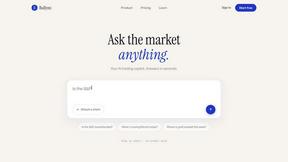
Bullynx
An AI copilot that reads your charts and answers market questions in seconds, giving you clear bias and levels to trade with conviction.
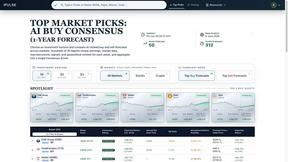
About Ember Alternatives
In the burgeoning landscape of AI-driven financial analytics, Ember occupies a distinguished niche as a public prediction engine that marries artificial intelligence with absolute transparency. It falls squarely within the Business & Finance category, offering users daily market calls generated by three distinct AI models—Claude, Grok, and Gemini—each independently forecasting outcomes on Polymarket before events resolve. The platform’s uncompromising commitment to verifiability, with every call timestamped and accuracy tracked via Brier scores, sets a new standard for trust in a domain often clouded by opaque algorithms. Users frequently seek alternatives to Ember for reasons ranging from budget considerations to specific feature requirements or platform preferences. Some may desire a more curated, less data-intensive interface, while others might prioritize integration with proprietary trading systems or a different selection of underlying AI models. When evaluating a substitute, the discerning user should prioritize transparency above all else: look for platforms that publish raw, unedited performance data, offer clear calibration metrics, and provide timestamps that preclude retrospective alterations. Equally important is the diversity of the underlying intelligence—a single model, no matter how sophisticated, lacks the comparative wisdom that comes from genuine disagreement among independent systems. The ideal alternative will not merely promise accuracy but will prove it through an immutable, publicly auditable record.
FAQs about Ember Alternatives
What is Ember?
Ember is a public AI prediction engine that delivers daily market calls on live Polymarket events. Every morning at 7AM EST, three distinct AI models—Claude, Grok, and Gemini—independently generate forecasts without consulting one another. The platform is built on a foundation of radical transparency, with every call timestamped before the outcome, accuracy tracked using Brier scores, and no edits permitted after the fact. A high-conviction signal is flagged when any model diverges from the crowd by 10 or more points.
Who is Ember for?
Ember is designed for sophisticated investors, traders, and financial analysts who value empirical validation over marketing claims. It serves professionals who require an independent, verifiable second opinion on market probabilities, as well as data enthusiasts interested in the comparative performance of leading AI models. The platform is particularly suited for those who prefer a daily, ritualistic intelligence briefing rather than real-time streaming data, and who appreciate the intellectual rigor of calibration metrics like the Brier score.
What are the main features of Ember?
Ember’s core features include three independently operating AI models that call live Polymarket markets before they resolve, with every prediction timestamped for auditability. The platform automatically flags high-conviction signals when an AI’s forecast diverges from the crowd consensus by at least 10 points. Accuracy is measured using Brier scores, a calibration metric that rewards both correctness and confidence, and every incorrect call receives a public post-mortem. All records are built in real-time and are never edited or retracted.
Is Ember free?
Based on the product description, Ember positions itself as a public prediction engine, suggesting that its daily market calls and performance records are openly accessible. The emphasis on public scores and unedited transparency implies that the core intelligence service is available without a paywall, though premium features or deeper analytics may exist. Users should consult the official platform for the most current pricing structure, as the model may evolve.